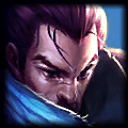
Mayhem vs Normal ARAM: Yasuo
Yasuo changes from a punish-based skirmisher into a much more commitment-heavy carry in Mayhem. In normal ARAM, he often waits for a knock-up, blocks one key spell with Wind Wall, then cleans up after the fight breaks open. In Mayhem, fights are faster, engage ranges are less predictable, and augments can give both teams extra ways to start, escape, or burst. That means Yasuo cannot play like he has unlimited time to stack Q and look stylish. He needs cleaner entry timing, faster target selection, and a real recovery plan if the first dash chain fails.
Role: less poke survivor, more tempo fighter
- Normal ARAM: Yasuo is often a scaling melee carry who suffers through poke, farms the wave, and waits for allied knock-ups. If the enemy team lacks reliable engage, he can slowly build space with Q stacks and Wind Wall.
- Mayhem: Yasuo has to contest tempo earlier. Augments and Snowball create more sudden all-ins, so standing back and waiting for a perfect ultimate can leave your team fighting four versus five. If your team has knock-ups, play near them and be ready to convert instantly. If your team lacks knock-ups, you must create pressure through wave dashes, Snowball angles, and short trades instead of waiting for a miracle engage.
Skill use: your buttons are the same, but the punishment is harsher
- Q is less about harmless stacking and more about threat timing. In normal ARAM, you can often stack Q on minions while both teams posture. In Mayhem, stepping up for a stack can trigger an instant engage or augmented burst. Stack Q when your Wind Wall is available, when enemy crowd control has just missed, or when your frontline is already occupying attention.
- Wind Wall is more valuable, but also easier to waste. Normal ARAM has obvious projectiles you save it for. Mayhem adds more chaotic fights, so panic-walling the first spell can lose the real fight. Use it when it blocks the enemy’s actual punish window: the marksman’s follow-up, the mage’s burst line, or the projectile crowd control that stops your dash path.
- E dashes need an exit target. In normal ARAM, Yasuo can sometimes dash through the wave and back out because fights move slower. In Mayhem, if you dash deep without a second unit to retreat through, you get collapsed on before your team can help. Enter through minions only when you know where the next dash goes, or when the target will die fast enough that the trade is worth it.
- R should not be treated as a highlight button. In normal ARAM, taking any knock-up can be fine if it starts a fight. In Mayhem, a bad Last Breath into five ready enemies can instantly throw the round. Ult when your team can follow, when the target is worth killing, or when the enemy has already spent the tools that would punish your landing spot.
Skill order: adapt to how the lobby is fighting
Normal ARAM Yasuo usually values Q consistency first because it controls trading, wave pressure, and knock-up access. That logic still matters in Mayhem, but the order should be judged by the game state rather than autopilot. If your team has strong engage and you are getting real melee uptime, Q priority keeps your damage and tornado pressure relevant. If the enemy is projectile-heavy and your team only wins when Wind Wall denies their main damage window, putting more value into defensive timing becomes more important than greedily looking for extra poke.
E becomes more important when the fight is about access, not raw damage. Against teams that kite backward with many slows, traps, or ranged threats, smoother dash access can decide whether you ever reach the carry. Against teams that run into you, E is less about chasing and more about repositioning around the wave so you do not get locked in one predictable line.
Tempo: Mayhem punishes slow Yasuo habits
- Do not spend the first half of every fight stacking Q off-screen. If your frontline engages and you are still fishing for the perfect tornado, the fight may already be decided. Move with the engage, even if your first job is only to Wind Wall and threaten a dash.
- Do not dash just because minions exist. In normal ARAM, wave dashing can create pressure and style points. In Mayhem, a random dash through the wave can put you inside multiple augmented damage zones or crowd control chains. Dash when it changes target access, dodges a key spell, or sets up a kill.
- Reset your position after every failed engage. If your tornado misses or your Snowball angle is denied, back up and rebuild. Chasing the same play with no Wind Wall, no wave, and no allied follow-up is how Yasuo turns from carry into free gold.
Augment impact: build around what your augments let you actually do
Augments matter more for Yasuo than they do for many straight-line carries because his success depends on access, timing, and survival after entry. Damage-focused augments are best when your team already supplies knock-ups, shields, or hard engage. If no one can start fights for you, pure damage may sit unused while you get kited. Mobility or durability-oriented augments become much stronger when they let you take one extra step after Last Breath, survive the landing, or re-enter after Wind Wall expires.
Do not let a flashy augment change your job in a bad way. If an augment encourages aggression, still ask whether the enemy team has instant crowd control waiting. If an augment improves survivability, do not use that as permission to dive the backline alone. The best Yasuo Mayhem games come from matching augment power to a real fight pattern: follow Malphite-style engage, block projectile retaliation, kill the isolated carry, then dash back through the wave or toward your team.
Snowball use: stronger engage tool, worse panic button
- In normal ARAM, Snowball often patches Yasuo’s range problem. You tag a backliner, wait for a knock-up chance, and follow when the enemy mispositions.
- In Mayhem, Snowball is also a commitment test. Taking it into a team with ready crowd control can get you deleted before you cast meaningful damage. Use the mark to threaten space first. You do not always need to take the second activation.
- Best Snowball use is layered with Q or allied engage. Mark a target after they spend mobility, after your team starts a knock-up, or when Wind Wall can cut off their peel. If you Snowball first and ask your team to catch up later, you usually land too early.
- Snowball can be defensive. Tagging a minion or frontline unit can give you a way back into the wave after a short trade. In Mayhem, that escape angle can matter more than a low-percentage dive onto the enemy carry.
Item and rune logic: normal ARAM greed gets punished faster
Normal ARAM Yasuo can sometimes get away with greedy damage paths if the enemy lacks hard engage or if his team has enough peel. In Mayhem, you should be more honest about how fights are being lost. If you are dying on the first crowd control chain, more damage does not fix the problem. You need survivability, anti-burst choices, or a playstyle shift where you enter second instead of first.
Runes and items should support your actual access pattern. If your team has multiple knock-ups and you reliably reach priority targets, damage and sustained fighting value make sense. If you are mostly absorbing poke and blocking spells for your carries, defensive value and consistency matter more. If the enemy has heavy healing, shielding, or armor stacking, adjust instead of forcing a standard carry setup. Mayhem rewards the Yasuo who solves the current fight, not the one who copies a normal ARAM page and hopes the lobby cooperates.
Teamfight spacing: stand where you can punish, not where you can be farmed
- Against projectile teams, play close enough to Wind Wall the real burst. If you stand too far back, your wall arrives late. If you stand too far forward, you get crowd controlled before casting it. The correct space is usually beside or slightly behind your frontline, ready to step in when the enemy commits damage.
- Against dive teams, stop thinking only about their backline. Sometimes your best Mayhem fight is killing the enemy diver who entered first, then using the reset in positioning to chase. If you ignore the diver and dash past them, your own carries may die before your ultimate matters.
- Against disengage teams, hold Q threat and force mistakes. Do not burn every dash trying to touch the carry. Walk forward with the wave, threaten tornado, and make them spend peel early. Once their escape tools are down, Snowball or E becomes much more reliable.
Normal ARAM habits that become wrong in Mayhem
- Waiting forever for the perfect five-man ultimate. Mayhem fights break quickly. A clean ultimate on one valuable target is often better than holding R until your team is already dead.
- Using Wind Wall for poke with no fight coming. If the enemy can engage after it disappears, you traded your best defensive tool for minor health preservation. Save it when the next few seconds decide the fight.
- Dashing through every minion wave. It looks active, but it exposes your path. Good enemies will aim crowd control at your landing options and punish the final dash.
- Taking every Snowball mark. In Mayhem, the mark is pressure by itself. Only take it when the landing spot is safe enough or the kill is important enough.
- Building like you are guaranteed free uptime. Yasuo only carries if he can keep hitting. If augments, crowd control, or burst prevent that, adjust before the game becomes unwinnable.
The big comparison is simple: normal ARAM Yasuo can often play patient and wait for the map to hand him a knock-up. Mayhem Yasuo has to create and spend tempo with discipline. Stack Q when it is safe, wall the spell that actually matters, enter on a real punish window, and leave yourself a way out. If you treat Mayhem like regular ARAM with more damage, you will over-dash and explode. If you treat it like a faster fight where every entry needs a reason, Yasuo still has the tools to take over.