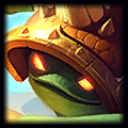
Mayhem vs Normal ARAM: Rammus
Rammus changes from a simple engage tank into a tempo bully in Mayhem. In normal ARAM, he often waits for the enemy marksman or melee diver to misstep, then commits with Powerball, taunt, Defensive Ball Curl, and Aftershock-style durability. In Mayhem, fights start faster, resets happen more often, and augments can make both teams far more explosive. That means Rammus cannot just roll in because he is tanky. He has to pick the moment when the enemy carry has already used mobility, when his own team can follow instantly, or when an augment/item spike lets him survive the first burst.
Role Difference
- Normal ARAM: Rammus is usually a counter-engage tank or anti-AD frontliner. He punishes auto attackers, blocks dive paths, and forces carries to respect taunt range.
- Mayhem: Rammus is more of a disruption starter and repeat-fight enabler. If his augments support speed, durability, crowd control uptime, or retaliation damage, he can start fights more often and punish sloppy spacing harder.
- The big mistake: playing him like an unkillable ball every fight. Mayhem damage spikes are higher and stranger than normal ARAM. If you roll into five champions while your team is clearing the wave behind you, you are not engaging; you are donating tempo.
Skill Use Changes
Powerball is less about long, obvious engages and more about angle control. In normal ARAM, rolling straight down the lane can work when enemies have no space. In Mayhem, that line is easier to punish because enemies may have stronger augments, faster casts, extra mobility, or enough burst to delete you before your team arrives. Start Powerball from brush, from behind your frontline, or after the enemy has stepped past the minion wave. If the first target is not valuable, cancel the idea and peel instead.
Taunt becomes your highest-value decision. Do not spend it on the first tank unless that tank is the only champion stopping your team from killing someone. In Mayhem, taunting a carry, reset champion, or high-damage bruiser during their commit is often better than forcing a blind engage. If an enemy assassin dives your backline, turn instantly. A defensive taunt can win harder than a flashy Powerball engage because it makes the assassin waste their burst window.
Defensive Ball Curl needs discipline. In normal ARAM, many Rammus players press it as soon as they arrive. In Mayhem, wait until damage is actually coming or you are about to be focused. If you activate it too early while still closing distance, enemies can kite backward, wait out your best durability window, then punish you when you are slow and committed. Use it when the enemy has chosen to hit you, not when you merely hope they will.
Your ultimate is a zone tool, not just bonus damage. In normal ARAM, it can be used to finish an engage or chase through the narrow lane. In Mayhem, use it to split the fight: land where the enemy backline wants to stand, force them to move away from their tanks, or cut off the escape path after your team lands crowd control. If you only ult the closest target every time, you lose the best part of the spell: making the enemy formation awkward.
Skill Order Logic
Normal ARAM habits often favor comfort maxing, but Mayhem rewards matching the lobby. If your team needs reliable engage and the enemy has squishy carries that can be reached, prioritize the tools that help you start and stick. If the enemy team is mostly physical damage or auto attackers, leaning into durability and punishment is stronger. If your team already has engage but lacks peel, your skill usage should shift around taunt value rather than chasing long rolls.
Do not lock your brain to one order. Against poke and disengage, more frequent or more threatening engage access matters because you must create fights before your team is chipped down. Against dive, the best “engage” may be holding your control spell for the second enemy who enters. Mayhem makes this more extreme because augments can turn one champion into the real fight condition. Identify that champion and shape your leveling and play around stopping them.
Tempo and Fight Rhythm
- Normal ARAM tempo: poke, wave clear, one engage, then a long reset or death push.
- Mayhem tempo: shorter windows, harder spikes, and more punishment for being late. If your team wins a skirmish, you often need to keep moving forward before the enemy stabilizes.
- Rammus-specific rule: after a won fight, stand between the enemy respawn path and your carries. Do not chase one low-health target so far that your team loses the wave or gets re-engaged without you.
- Recovery plan: if your first engage fails, stop rolling in on cooldown. Play peel for one wave, let your team reset spacing, then look for a shorter engage from brush or after an enemy mobility spell is used.
Augment Impact
Augments matter more for Rammus in Mayhem than rune pages do in normal ARAM. A durability augment can let him absorb the first burst and actually reach the taunt target. A speed or engage-focused augment can turn him from predictable to threatening. A damage-return or armor-scaling style option can make auto attackers hesitate before hitting him. The key is not the label; it is what the augment lets you do in the next fight.
Pick augments that solve your current problem. If you are dying before taunt, take survivability. If enemies are kiting every Powerball, take access, speed, or sticking power. If your team lacks damage and the enemy must hit you to win, retaliation-style value becomes better. Do not greed for damage when the enemy has enough magic burst to kill you through your engage. A dead Rammus does not reflect, peel, or zone.
Snowball Use
Snowball is stronger but also more dangerous in Mayhem. In normal ARAM, Rammus can use Snowball as a backup engage when Powerball is blocked by minions. In Mayhem, Snowball lets him bypass the obvious roll path and appear directly on a priority target, but it also pulls him away from his team if he recasts too early. Hit Snowball, wait a beat, check ally distance, then decide.
- Use Snowball to punish carries who step forward after using dash, cleanse-like tools, or defensive spacing. Recast only if your team can hit the same target.
- Use Snowball defensively when a diver passes you and goes for your backline. Tag them, follow, taunt, and turn the fight into a trap.
- Do not Snowball into five just because it landed. In Mayhem, landing the mark is an option, not an obligation. If the enemy team is stacked with cooldowns ready, let it expire and keep your frontline position.
Item and Rune Logic
Normal ARAM Rammus often defaults to armor-heavy tank builds, but Mayhem asks for faster adaptation. Armor is still great into auto attackers and physical-heavy teams, but it is not a universal answer. If the enemy’s main threat is magic burst, true-damage style pressure, or repeated spell damage, pure armor stacking can make you look tanky on paper while you vanish in fights. Build to survive the damage that is actually killing you.
Item choices should match your job. If you are the only engage, you need enough durability to start and enough movement or utility to reach targets. If your team already has engage, you can itemize more for peel and anti-carry punishment. If the enemy has heavy healing or shielding, make sure your team has an answer before you commit to a long front-to-back fight. Rammus can force enemies to hit him, but he cannot win a sustain war alone if nobody cuts the sustain.
Runes are less defining than decisions. Normal ARAM players may rely on a familiar tank rune setup and assume the champion plays itself. In Mayhem, the fight is often decided by whether you entered from the right angle, held taunt for the real carry, or waited out a key cooldown. Runes support the plan. They do not replace it.
Teamfight Spacing
Rammus wants threatening distance, not maximum distance. In normal ARAM, sitting far back and rolling from safety can be acceptable because enemies have fewer ways to instantly punish the path. In Mayhem, if you start too far away, the enemy sees the engage, spreads out, and unloads on you before your team can follow. Stand close enough that Powerball or Snowball creates immediate pressure, but not so close that you eat poke for free.
Your best position is often off-center. If you stand directly in front of your carries, the enemy can track you easily. If you hover slightly to the side, you threaten the backline angle while still being close enough to peel. This forces the enemy to choose: step away from your engage and give up space, or walk forward and risk taunt.
Normal ARAM Habits That Become Wrong in Mayhem
- Rolling straight down mid every fight: predictable engages get punished harder in Mayhem. Use brush, side angles, Snowball marks, and enemy cooldown windows.
- Taunting the first champion in range: Mayhem carries and augmented threats decide fights quickly. Save taunt for the target that actually wins the fight for them.
- Building only armor by default: armor is great into the right lobby, but Mayhem damage profiles can punish lazy itemization. Check what killed you and adjust.
- Pressing Defensive Ball Curl too early: enemies can kite your durability window, then kill you after. Activate it when they commit damage or when you are locking a target down.
- Chasing forever after a knockup: Rammus is fast, but your team may not be. If the chase pulls you away from your carries, the enemy second wave of damage can wipe them.
- Ignoring peel because you are “the engage”: in Mayhem, the best play is often turning on the diver. A taunted assassin next to your backline is usually a dead assassin.
The clean Mayhem Rammus mindset is simple: create pressure before the enemy is ready, commit only when your team can cash in, and do not waste your control on low-value targets. Normal ARAM rewards patience and basic counter-engage. Mayhem rewards sharper reads. If you choose the right target and enter from the right angle, Rammus can make the lane feel impossible for auto attackers and reckless divers. If you autopilot, the mode will punish you fast.