Skill Order
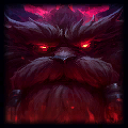
Normal order: R > W > Q > E. Unlock Q, W, and E early so you can make the full Ornn trade: Q creates terrain and slows, W applies Brittle pressure, and E turns that terrain into a knock-up. After that, max W first. Ornn wins most Mayhem fights by surviving the first burst, forcing enemies to stand near him, and punishing anyone who gets clipped by Brittle. W is the most reliable button for that job because it works in the messy front-to-front fights where Ornn cannot safely sit back and play like a poke tank.
Normal Maxing Plan
- Max W first when fights are close-range or your team wants a real frontline. Walk up after enemy poke is used, press W when they commit into you, then look for Q into E or R follow-up. This order gives you the best brawl pattern: you are not waiting on a narrow line skillshot to matter, and you are not relying on teammates to start every fight for you. If you skip W levels in these games, you often become a big body with weak threat, so enemies can ignore you until your backline is already under pressure.
- Max Q second in the standard setup. Q is your safer way to start contact, check space, slow a target, and place terrain for E. Put points here after W when the enemy team still respects your engage but tries to kite backward. The extra Q focus helps you create more punish windows: Q behind or beside a target, wait for their sidestep, then E if they stay near the pillar. If you leave Q too low for too long, your engages become obvious because you must walk straight at people before anything happens.
- Max E last in most normal games. E is still important, but one point already gives you the key function: dash into terrain and threaten the knock-up. More points are better when you are repeatedly landing the combo, but they do not replace W’s frontline value or Q’s setup value in a normal match. If you max E too early without reliable terrain access, missed dashes are brutal. You spend your movement, land in front of five enemies, and give them a clean punish window before your team can follow.
- Take R whenever it is available. Ornn’s ultimate is your cleanest long-range engage and your best way to force enemies to stop free-hitting your team. Use it when the enemy has already used mobility, when your Q slow has made their path predictable, or when your carries are ready to hit the knocked-up target. Delaying R levels makes your teamfight start weaker, and Ornn without a threatening R often has to overwalk into poke just to begin a fight.
Augment-Influenced Orders
- Default tank or brawl augments: R > W > Q > E. If your augments make you harder to kill, reward staying in combat, or help you soak damage while your team hits, keep the normal W-first order. Your job is to stand in the dangerous space and make enemies pay for walking through you. W first fits that plan because it gives you the strongest repeated close-range threat. The mistake is getting tempted into Q max just because the enemy has range; if your augment power is tied to brawling, you still need the spell that wins the brawl once you finally reach them.
- Poke, spacing, or long-range setup augments: R > Q > W > E. If your augments clearly reward landing spells from distance, controlling space, or starting fights before anyone commits, max Q first. Use Q to soften the wave area, mark a path the enemy cannot comfortably cross, then threaten E only when the pillar position is good. This order is best when walking into W range gets you chunked before the fight starts. The cost is clear: your all-in is weaker if the enemy hard-engages through your Q, so play a step closer to your carries and use W defensively instead of pretending you are still the main damage threat.
- Engage, mobility, or crowd-control-focused augments: R > W > E > Q. If your augment setup makes your initiations safer, rewards landing crowd control, or gives your team a strong reason to instantly follow your knock-up, take W first and E second. In this version, you are not poking for comfort; you are looking for the first enemy who mispositions near terrain, your Q pillar, or a wall. W stays first so you still survive the entry and threaten Brittle after contact. E second makes sense only when you are actually getting engage angles. If the enemy team is spacing perfectly and you cannot dash in without dying, switch back to Q second instead of forcing low-value E levels.
- Defensive recovery augments: R > W > Q > E, with earlier Q points if you are being outranged. When your augment setup helps you live but your team is losing space, W first keeps you useful in the inevitable dive, while Q points let you slow the enemy advance and create terrain for disengage E. Use Q between the enemy frontline and your carries, not randomly into the wave, because the goal is to make their engage path worse. If you greed E second here, you may dash away from your backline or into a fight your damage dealers cannot reach, which turns a defensive build into a bad suicide engage.
Adjustment Triggers
- Go W first when enemies must come into you. If they have melee divers, short-range bruisers, or a team that wants to fight in a clump, W max punishes their natural path. Stand near your carries, hold Q until they commit, then W as they enter your space. Choosing Q max in this situation can leave you with prettier poke but worse peel, and Ornn loses value fast when divers can run past him without fearing the close-range trade.
- Go Q first when you cannot walk up without losing half your health. If the enemy has heavy range, constant slows, or enough disengage to deny W trades, Q max gives you a way to play the game before the all-in. Use Q to force movement, not just to deal damage. A pillar that makes an enemy sidestep into your R angle is worth more than a random poke Q. The cost of staying W-first in these games is tempo: you take damage trying to reach people, then arrive too low to actually tank.
- Take E second when your team can instantly punish your knock-up. If your allies have burst, follow-up crowd control, or short-range damage that needs you to pin someone down, E second can turn every Q pillar into a real kill threat. Ping or posture before you dash, because Ornn’s missed E is one of the easiest punish windows enemies get. If your teammates are clearing waves or playing far back, do not invest into E second just to make solo hero plays; you will start fights nobody can finish.
- Delay E max when the enemy is spread out or saving disengage for you. In those games, Q second is safer because it creates repeated pressure without spending your body. E still completes the combo, but maxing it early asks you to commit into targets that may simply move, dash, or peel you away. If you already fell behind, use Q and R to start slower fights, then E only after an enemy has used their escape or is pinned near terrain.
Cost of the Wrong Order
Wrong maxing on Ornn does not just lower damage; it changes which fights you are allowed to take. Q max into a brawl-heavy enemy can make you too soft in the actual collision, while E max without reliable setup turns your engage into a coin flip. W max into extreme range can also fail if you never reach anyone before the fight is decided. Read the first few waves, look at your augments, and adjust before the midgame teamfights start. Ornn is strongest when his skill order matches how he is entering the fight: W for standing ground, Q for creating access, and E second only when the knock-up is consistently being cashed in.