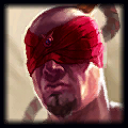
Lee Sin – Detailed Ability Guide (Mayhem ARAM)
Lee Sin thrives in Mayhem because the mode amplifies his mobility and pick potential while reducing the punishment for missing a Sonic Wave. Lower cooldowns and frequent Snowballs let him fly across the map, but he still demands clean mechanics. If you whiff your gap-closers or blow your kick at the wrong target, you become a squishy melee with no escape route.
Passive – Flurry
Function: After casting any ability, Lee Sin’s next two basic attacks gain attack speed and restore energy. This is the engine that keeps his combo chain running.
Mayhem Use: In Mayhem’s chaotic teamfights, the attack speed spike is more valuable for weaving damage than the energy return, since regen is accelerated globally. You use it to reset your auto-attack timer, shaving fractions of a second off your burst window.
Targeting and Hit Logic: No targeting required. Just make sure you are in auto-attack range of something—champion, minion, or structure—immediately after a cast.
Combo Role: It bridges the gap between ability casts. A typical pattern is Q1 > auto > auto > Q2, ensuring you get the damage and energy before committing further.
Early Fight Use: In the first minutes, use Flurry to shove the wave if your team wants pressure. The attack speed helps you last-hit under tower or chip the enemy frontline when they step up.
Teamfight Use: In big brawls, Flurry is your sustain tool. If you dive the backline, landing those two empowered autos is often the difference between having enough energy for a Safeguard escape or standing there auto-attacking until you die.
Counterplay: Enemies can disengage after your first ability cast to deny the Flurry autos. If they create distance, you waste the attack speed buff.
Leveling Priority: Passive does not rank up, but your playstyle must adapt to it. Do not spam abilities mindlessly without weaving autos, or you will run dry.
Punishment for Wasting: Casting an ability and then getting kited before auto-attacking leaves you with lower damage output and a depleted energy bar. In Mayhem, that hesitation gets you killed.
Q – Sonic Wave / Resonating Strike
Function: Q1 fires a skillshot that reveals enemies on hit. Q2 dashes to the revealed target, dealing execute damage based on their missing health.
Mayhem Use: This is your primary engage and finisher. The execute scaling makes it lethal against targets that have already been chipped by your team’s poke. In Mayhem, where health pools fluctuate rapidly, Q2 often acts as a closer rather than an opener.
Targeting and Hit Logic: Q1 is a linear skillshot that travels through the first enemy hit. You must land it on a champion to enable a meaningful Q2; hitting a minion is useful for gap-closing but offers no kill pressure.
Combo Role: The classic Lee Sin combo starts here. Q1 is the setup; Q2 is the commitment. You often hold Q2 until your team follows up or until the target is low enough for the execute to secure the kill.
Early Fight Use: Use Q1 to check brushes or poke the frontline. Do not instantly Q2 into a full enemy team at level one. Instead, fish for Q1s, auto-attack to proc Flurry, and look for an all-in when an enemy is isolated.
Teamfight Use: In late-stage Mayhem brawls, you have two options. You can Q a frontline tank, Q2 through them, and then Dragon’s Rage them into their backline. Alternatively, hold Q for a low-health carry and use Q2 to execute them before escaping with W.
Counterplay: Minion blocking is the main counter. Smart enemies stay behind the wave in Mayhem, forcing you to either flank or use Snowball to bypass the frontline. Sidestepping Q1 is also effective, as it forces you to play without your main gap-closer.
Leveling Priority: Max Q first for lower cooldowns and higher execute damage. The reduced cooldown on Q1 lets you fish for picks more often.
Punishment for Wasting: Missing Q1 removes your threat range. If you Q2 into a bad situation—like a fed enemy carry with their cooldowns up—you are dead before your W comes back online.
W – Safeguard / Iron Will
Function: W1 dashes to a target ally, granting both of you a shield. W2 grants lifesteal and spell vamp for a few seconds.
Mayhem Use: Safeguard is your safety net. In Mayhem, you can W to any ally, including the Snowball projectile itself if you time it right, or minions behind you. This makes you incredibly slippery if you keep a dash available.
Targeting and Hit Logic: W1 is a point-and-click dash to an ally unit. It cannot target enemies. W2 is a self-buff.
Combo Role: W is the bridge between aggression and survival. You can Q1 > Q2 > W out to escape after dealing damage. You can also W to an ally minion to close distance, then Q1 for a surprise engage.
Early Fight Use: Use W to dodge key skillshots or to shield an ally taking poke damage. The lifesteal from W2 helps you sustain between fights, so use it on cooldown if you are hovering around half health.
Teamfight Use: Save W for a disengage or a reposition. If you dive the enemy backline, look for a low-health ally or minion to W to after you drop your burst. W2’s spell vamp can also sustain you through a chaotic fight if you stand your ground and trade.
Counterplay: Enemies can predict your W target. If you always W to the same minion or ally, they can drop area-of-effect crowd control on that spot, trapping you both. Hard crowd control like stuns or roots during your W dash stops you mid-flight.
Leveling Priority: Max W second or third depending on how much survivability you need. Against heavy poke, earlier points in W help you sustain. If you are snowballing, maxing E second offers more damage.
Punishment for Wasting: Using W offensively with no plan to get out leaves you stranded. If you W into an ally who is about to die, you might feed a double kill. Always have an exit angle before you commit.
E – Tempest / Cripple
Function: E1 deals magic damage in an area around Lee Sin and reveals enemies. E2 slows enemies hit by E1.
Mayhem Use: Tempest is your wave clear and reveal tool. In Mayhem, where brushes and stealth champions are common, the reveal effect on E1 is critical. The slow on E2 helps you chase or peel.
Targeting and Hit Logic: E1 is a point-blank area-of-effect. It requires you to be in melee range. E2 is a self-activation that applies a slow to anyone tagged by E1.
Combo Role: E is usually woven into the middle of a combo. For example, Q1 > Q2 > E1 > E2 > auto-attacks. The slow from E2 makes it easier to land subsequent abilities or to line up a Dragon’s Rage.
Early Fight Use: Use E to clear the minion wave quickly, forcing the enemy to fight under their tower. The reveal stops enemies from hiding in brushes to bait your team.
Teamfight Use: Pop E when you are in the middle of the enemy team. The magic damage is often underestimated, and the slow disrupts their kiting. Against stealth champions like Shaco or Vayne, E1 is your hard counter to their invisibility.
Counterplay: The range is short. Ranged enemies can simply walk out of E1’s radius before you cast it. If you miss E1, you get no slow, making it easier for them to escape.
Leveling Priority: Max E second for damage and wave clear if you are ahead or if the enemy team is squishy. Otherwise, prioritize W for survival.
Punishment for Wasting: Casting E1 when no one is in range wastes energy and leaves you without a slow for the next few seconds. This is a common mistake when you panic and mash keys while getting kited.
R – Dragon’s Rage
Function: Lee Sin performs a powerful roundhouse kick, knocking back the target champion. Enemies hit by the knocked-back target take damage and are knocked up.
Mayhem Use: Dragon’s Rage is your playmaking ultimate. In Mayhem, the chaos of clustered fights means a good kick can hit three or four enemies. It is both a kill secure and a peel tool.
Targeting and Hit Logic: R is a point-and-click ability on an enemy champion. The direction of the knockback is based on Lee Sin’s position relative to the target. You control the angle.
Combo Role: The famous “Insec” combo defines Lee Sin: Q1 > Q2 > place ward behind enemy > W to ward > R the enemy into your team. In Mayhem, you can simplify this by using Snowball or a minion to get behind them, then R them backwards.
Early Fight Use: At level six, look for a kick that knocks the enemy frontline into their backline. This disrupts their formation and often forces flashes. You can also use R to execute a low-health target under their tower, then W out to safety.
Teamfight Use: Hold R for a high-value target or a multi-man knockup. Kicking a tank into their carries is often better than kicking a carry to safety. If an assassin dives your backline, use R to peel them away, creating space for your team.
Counterplay: Flash, dashes, and Unstoppable status can counter your kick setup. If you start the animation and they flash, the kick might send them in an unexpected direction. Cleanse or Quicksilver effects can also drop the target before you kick, wasting your ultimate.
Leveling Priority: Put points in R whenever available at levels 6, 11, and 16. The damage and lower cooldown are essential.
Punishment for Wasting: A bad R can save the enemy. Kicking a carry away from your team when they were about to die is a classic Lee Sin mistake. It turns a guaranteed kill into a failed engage. Always check your angle before you press R.