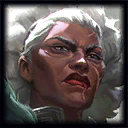
Practical Match Tips for Ambessa
Ambessa wins when she enters second, not first. In ARAM: Mayhem, fights start fast and the lane is too narrow to hide a bad commit. Let a poke spell, Snowball, tank engage, or enemy dash pull attention first, then move in while key crowd control is already spent. If you start the fight from full vision with no setup, the enemy backline can kite backward in a straight line and punish every dash with layered slows, roots, and burst.
Engage Pattern
- Look for a marked or isolated target before committing. Ambessa is strongest when she can stick to one champion through the first few seconds of chaos. If the enemy carry steps past their frontline to poke, use that small spacing error as your green light. Do not waste your full entry on the closest tank unless your team is already burning them down.
- Chain movement with purpose, not panic. Use each cast to reposition around the target instead of simply moving forward. Step slightly to the side after an ability so skillshots aimed down the lane miss behind you. If you dash straight through the same line every time, control mages and marksmen can pre-aim your exit spot.
- Hold your biggest commit until the enemy response is visible. If the opponent still has a displacement, hard crowd control, or an escape tool ready, force it with a shorter trade first. Once they use it defensively, you can chase deeper with much lower risk. Ambessa snowballs fights by making enemies spend tools badly, not by eating every spell at the start.
Counter-Engage
- When an enemy dives your backline, turn immediately if they are separated from follow-up. Ambessa can punish divers who enter through Snowball or a long dash and land alone. Hit them from the side, keep your body between them and your carry, and force them to either retreat through you or keep fighting while surrounded.
- Do not chase the diver if their team is still untouched behind them. If you run past the enemy frontline to finish a low-health assassin, you may give the opposing carries a free angle on your whole team. Secure the diver only when your backline can move forward with you or when the enemy support tools are already committed.
- Use counter-engage after poke has softened the enemy wave and champions. If your team clears minions first, the enemy has fewer bodies blocking skillshots and fewer safe steps backward. That is the moment to punish a forced engage, because their retreat path is shorter and your team can follow without walking through a full minion wave.
Escape and Reset Discipline
- Always keep one movement option for the way out unless the kill ends the fight. Ambessa feels slippery, but she can still get trapped if every dash is spent forward. If the enemy has slows or roots waiting, trade once, sidestep, and leave before they collapse. A half-health Ambessa with cooldowns returning is still a threat; a dead Ambessa gives up all lane pressure.
- Retreat diagonally, not straight back. The Howling Abyss lane rewards predictable lines. When you disengage, angle toward brush, health relic space, or your frontline instead of running directly down the lane. Diagonal movement makes long-range skillshots and follow-up Snowballs harder to land.
- If you are tagged by Snowball, back toward your team instead of away from them. A marked Ambessa who retreats alone gives the enemy an isolated landing. Pull the incoming champion into your teammates, then turn when they arrive. If you cannot fight, use the landing moment to create distance after they commit.
Narrow-Lane Spacing
- Play on the edge of the fight, not the center line. Ambessa wants angles. Stand slightly off to one side of your minion wave so you can threaten carries without eating every poke spell aimed at your team. If you sit in the middle, enemy area damage will hit you while they are clearing minions anyway.
- Respect stacked control zones. When the enemy has multiple champions holding stuns, knockups, roots, or silences, wait until at least one zone is used on minions or another teammate. Walking through all of them at once is the most common way to turn Ambessa from a flanker into free gold.
- Use brush only when it creates uncertainty. If the enemy has already seen you enter brush and can cover it with area damage, do not stand there waiting to be checked. Step out, reset vision, and re-enter after the wave changes. The threat of Ambessa missing is often stronger than Ambessa face-tanking poke in a known bush.
Target Priority
- Primary targets are immobile carries, low-health mages, and supports who have just used peel. Ambessa needs a target that cannot instantly deny her follow-up. If a marksman has no dash available or a mage has used their control spell, go hard and force the fight to revolve around them.
- Hit tanks only when they are overextended or your team is ready to focus them. Ambessa can brawl, but spending your whole entry on a durable frontline while enemy carries free-hit is usually losing value. If the tank walks too far forward, punish them quickly, then decide whether to continue or reset before the backline collapses.
- Swap targets when the first target drags you into danger. If a carry kites under multiple teammates, do not tunnel. Turn onto the closest enemy who steps up to peel. This keeps your damage active while avoiding the classic chase where Ambessa ends up alone behind the enemy wave.
Snowball Timing
- Use Snowball as a confirmation tool, not a coin flip. Throw it when the enemy is slowed, locked in an animation, standing in a minion gap, or forced against terrain. Random long-range Snowballs announce your plan and give the enemy team time to stack crowd control where you will land.
- Delay the second activation if landing immediately is bad. A hit Snowball does not mean you must take it. Watch for shields, peel, and enemy teammates moving toward the mark. If the target backs into five champions, let the mark expire and keep your position. If they panic forward or split from their team, take it and punish.
- Snowball after the wave is thinned. Minions can block follow-up and make your team slow to join. When the wave is low or cleared, a successful Snowball creates a cleaner entry because allies can move with you instead of fighting through bodies.
Augment Trigger Windows
- Before a fight, know what condition your augments reward. If your setup rewards dashing, chaining damage, shielding, takedowns, or low-health fighting, plan the first three seconds around that trigger. Do not discover your window after you are already stunned in the middle of the lane.
- Trigger offensive augments when the enemy cannot instantly disengage. Wait for a slow, allied crowd control, Snowball landing, or a carry stepping too close. If you activate your strongest damage window into a target with every escape still ready, they can kite it out and re-engage when your threat drops.
- Use defensive or sustain windows before the burst lands, not after you are already one hit from death. If your augment value depends on surviving the first exchange, enter with a plan to absorb damage while your team follows. Greeding the trigger too late usually means you die before the payoff matters.
- Takedown-based windows require target discipline. If your augment spikes after a kill or assist, call your damage onto the lowest safe target first. Securing one reset-style moment can open the whole fight, but diving past three healthy enemies for a flashy backline kill can waste the condition completely.
Push and Pull Rhythm
- When your team has wave control, stand forward and threaten the side angle. The enemy must choose between clearing minions and respecting your engage. If they spend spells on the wave, step up. If they hold spells for you, your team gets tower pressure and poke time.
- When your wave is gone, pull back immediately. Ambessa without minions in front of her is much easier to mark, poke, and collapse on. Give ground until the next wave arrives, then look for a re-entry. Losing a few steps is better than losing health before the real fight starts.
- After winning a trade, do not always chase. If the enemy is low but your team cannot follow, use the health advantage to push the wave, take space, and threaten the next engage. Forcing under tower with no cooldowns ready gives the enemy a clean punish window.
Dive Timing
- Dive only when the target is already pressured. Good dive signs are low health, used peel, no nearby frontline, or an allied wave reaching tower. If the enemy carry is full health with support tools ready, wait. Ambessa can start dives, but she still needs the fight to end before the whole enemy team turns.
- Enter after tower focus is managed by your team or after the enemy has stepped outside safety. If you take the first hit and get controlled under tower, you may die before dealing meaningful damage. Let a tank, minion wave, or enemy misposition create the opening, then burst through the weak point.
- Leave as soon as the kill is secured or the target escapes behind fresh cooldowns. Do not keep fighting under tower just because you reached the backline. If the kill fails and enemy control returns, dash out, regroup, and use the forced summoners or health loss to win the next wave.
Playing From Behind
- Stop forcing first engage when behind. If your team lacks damage or health, Ambessa should punish overextensions instead of starting fair fights. Sit near your carries, threaten anyone who walks too far forward, and make the enemy spend tools before you commit.
- Trade for wave control and health, not hero kills. Short trades into the nearest target can slow the enemy push and buy time for relics, item spikes, or better augment windows. A failed all-in while behind usually gives the enemy tower damage and a reset of lane pressure.
- Protect shutdowns and high-damage teammates. If one ally is carrying the damage, your job may be to peel instead of flank. Hit divers, body-block the lane angle, and force enemies to fight through you. Ambessa does not need to kill the backline every fight to be useful.
- When the enemy groups tightly, wait for them to split on the chase. Behind-state comebacks often start when opponents overrun the lane after a low-health target. Retreat together, let one enemy step too far ahead, then collapse quickly. Take the single kill, reset the wave, and do not overchase into the next trap.
The clean Ambessa game is controlled aggression. Enter after a mistake, stick to the right target, and leave before the punish lands. If you keep one escape route, respect narrow-lane control, and time Snowball or augment windows around real openings, she becomes a constant threat instead of a one-way dive champion.