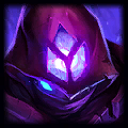
Mayhem vs Normal ARAM: Malzahar
Normal ARAM Malzahar is usually a controlled poke-and-pick mage. You spread Malefic Visions through waves, silence clumped targets with Call of the Void, and hold Nether Grasp for the diver who crosses the line. The game rewards patience because enemy engages are more predictable and fights often start around minion waves.
Mayhem Malzahar plays faster and has less room to be lazy with spacing. More mobility, stronger engage angles, and augment-driven burst mean your passive shield gets tested constantly. You are still a lockdown mage, but you cannot stand forward just because Spell Shield is up. Treat the shield as a way to survive the first mistake, not permission to make one.
Role: from wave-control mage to punish-and-lock specialist
- In normal ARAM, Malzahar can win long neutral phases by pushing the wave, tagging enemies with E, and forcing them to choose between clearing minions or eating damage. His value is steady because every wave gives him another chance to spread pressure.
- In Mayhem, the wave still matters, but fights break open faster. Your biggest job is identifying which enemy becomes unstoppable if they are not suppressed. When that champion commits, you punish with Nether Grasp after their first mobility tool or defensive effect is spent.
- Do not ult the first target you see if the enemy team has a reset assassin, heavy diver, or carry with an augment that rewards immediate cleanup. In Mayhem, wasting suppression on a low-threat tank can lose the fight before your damage-over-time ever matters.
Skill use: less autopilot E spam, more deliberate zones
- Malefic Visions is still your bread-and-butter spell for wave pressure and chip damage. In normal ARAM, spreading it through minions is often safe value. In Mayhem, cast it when the target is likely to stay in range of follow-up damage or when your team can punish their movement. Random E on a frontliner is weak if their backline is already preparing to dive past them.
- Call of the Void becomes more important as a timing tool. In normal ARAM, you can throw it for poke and wave clear. In Mayhem, save it more often to cut off engage paths, interrupt channel-like aggression, or silence enemies right before they unload their combo. A silence placed behind a diving champion can be better than one placed directly on the tank, because it blocks the follow-up damage.
- Void Swarm should not be treated as free damage. In normal ARAM, voidlings can help shove and amplify your lane pressure. In Mayhem, they die quickly in messy fights, so summon them when your E is already active, when minions are nearby to protect the push, or when the enemy’s area damage has just been used.
- Nether Grasp is stronger and riskier at the same time. Suppression is premium crowd control in Mayhem, but standing still is a real punish window. Use it when your team is close enough to hit the target, when dangerous interrupts are out of position, or when suppressing one champion prevents a bigger engage from starting.
Skill order: same priorities, different reasons
Compared with normal ARAM, the skill priority usually stays focused on the spell that gives Malzahar reliable pressure and damage flow, with silence and voidlings supporting that plan. The difference is why you level and use them. In normal ARAM, you are often maximizing lane control. In Mayhem, you are maximizing the chance that your damage sticks before the fight explodes.
If your team lacks wave clear, keep your spell use centered on stabilizing minions first. If your team already clears well, lean harder into silence placement and ultimate threat. Mayhem punishes Malzahar when he clears every wave on cooldown and then has no answer when the enemy uses the cleared space to engage.
Tempo: Mayhem gives you fewer quiet seconds
- Normal ARAM tempo lets Malzahar reset the wave, wait for passive shield, and slowly wear enemies down. You can often hold ult for the perfect diver because the enemy has to walk through predictable lanes.
- Mayhem tempo forces earlier decisions. If the enemy has multiple fast engage tools or augment-driven burst, you may need to use silence defensively before the main fight begins. If you wait for the “perfect” Nether Grasp every time, your backline may die before you cast it.
- After your ultimate is down, immediately play like a lower-threat control mage. Step back, use Q to zone, and rebuild pressure through E. In normal ARAM, enemies may still respect you out of habit. In Mayhem, good players will track that suppress is gone and jump you or your carry.
Augment impact: power shifts your job, not your identity
Augments can make Malzahar feel like a heavier damage dealer, a safer controller, or a faster spell-cycling mage, but they do not change the core rule: you need enemies to stay inside your damage and your team must capitalize on your lockdown. If an augment improves poke or damage-over-time patterns, play around repeated E and Q pressure. If it helps survivability, you can hold slightly closer positions, but only when the enemy’s engage tools are visible. If it rewards crowd control or burst windows, treat Nether Grasp as a team kill button rather than a personal duel tool.
The common Mayhem mistake is choosing augments that look exciting and then playing as if Malzahar became a brawler. He did not. Even with strong offensive power, his best fights start with controlled spacing, a silenced entry point, and a suppressed priority target while allies are ready to fire.
Snowball use: mostly defensive or confirm-focused
- In normal ARAM, Malzahar rarely needs Snowball to function. He can sit behind the wave and win through spell range, silence, and ultimate threat.
- In Mayhem, Snowball has more value as a repositioning and punish tool, but reckless recasts are brutal. If you Snowball into the enemy team and ult, you are standing still in the place where every interrupt and burst spell wants to land.
- Use Snowball to follow a guaranteed pick when your team has already started the collapse, or to reposition after tagging a low-health target who cannot kite back through allies. Do not use it just to “get in range” for Nether Grasp unless the target is worth your death and your team is close enough to finish.
- Defensively, holding Snowball can matter. Tagging a minion or frontliner and delaying the recast can create a small escape or spacing option when divers force you off your position.
Item and rune logic: less greedy scaling, more survival thresholds
Normal ARAM Malzahar often gets away with straightforward damage and mana-focused setups because the lane is stable and his passive helps cover poke mistakes. In Mayhem, you should be more willing to adjust for the enemy’s actual kill pattern. If assassins or divers are deleting you before Nether Grasp finishes its value, defensive or anti-burst choices become damage items in practice, because dead Malzahar contributes nothing.
Damage-over-time and spell uptime still matter, but do not tunnel on maximum damage when the enemy has clean ways to reach you. If they rely on healing or repeated shielding, consider anti-sustain or utility earlier. If they are mostly long-range poke, sustain and safe wave control become more important. If they are full dive, survival, ability haste, and reliable lockdown windows are often better than greed.
Rune logic follows the same split. Normal ARAM can reward consistent poke patterns. Mayhem rewards runes that match how fights actually happen: repeated spell trading when the game is slow, burst support when your team has pick tools, or defensive value when you are the obvious dive target. Pick for the matchup, not for a fixed ARAM habit.
Teamfight spacing: your line is behind the threat, not behind the minions
- In normal ARAM, standing behind minions is usually enough to feel safe. Your passive blocks a key poke spell, and your wave clear keeps enemies from walking in freely.
- In Mayhem, minions are not a wall. Position behind the ally who can punish a dive, not merely behind the wave. If your frontline is too far forward, do not follow them into a gap where you can be flanked or forced to ult defensively.
- Keep a diagonal angle when possible. Straight-line positioning makes it easy for the enemy to hit you and your carry with the same engage. A slight side angle lets your Q cover the entry path while your ultimate remains in range for whoever commits too deep.
- When your passive shield breaks, back up immediately unless the enemy engage spell was also spent. Mayhem players will often use a small poke hit just to remove the shield, then send the real engage right after.
ARAM habits that become wrong in Mayhem
- Wrong habit: ulting the tank every fight. In Mayhem, the tank may want that. Suppress the champion whose freedom wins the fight, unless killing the tank instantly opens the map for your team.
- Wrong habit: clearing every wave at max range and calling it value. If your spells are down when the engage starts, the pushed wave did not protect you. Keep at least one control spell ready when enemies are posturing forward.
- Wrong habit: trusting passive shield too much. It blocks one piece of pressure, not the whole fight. After it drops, your positioning must change right away.
- Wrong habit: Snowballing in because you landed it. A hit Snowball is an option, not an order. Recast only when the target is isolated, your team is moving, or the fight is already won by your arrival.
- Wrong habit: building only for scoreboard damage. Mayhem rewards the Malzahar who survives long enough to silence the engage and suppress the carry. If a defensive choice lets you cast one more rotation, it often adds more real damage than a greedy item would.
Malzahar in Mayhem is still simple in shape: spread damage, deny movement, punish commitment. The execution is less forgiving than normal ARAM. Play slower with your feet, faster with your decisions, and save Nether Grasp for the enemy who actually breaks the fight open.