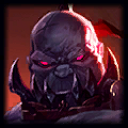
Mayhem vs Normal ARAM: Sion
Sion changes from a slow front-line anchor in normal ARAM into a much more explosive engage and disruption pick in Mayhem. In standard ARAM, he often wins by soaking damage, charging Decimating Smash from fog or behind minions, and using Unstoppable Onslaught to start fights that his team can actually follow. In Mayhem, fights break open faster, augments can add unexpected reach or durability, and both teams usually have more tools to punish a predictable tank walking forward. You still play like a wall, but you cannot play like a stationary wall.
Role and job in fights
- Normal ARAM: Sion is usually a front-to-back tank or a hard engage button. He stands near the wave, threatens charged Q, absorbs poke with W, and looks for ult angles when the enemy carries step too far forward. His value comes from being hard to move and forcing enemies to respect space.
- Mayhem: Sion is more of a chaos initiator and zone-breaker. Your job is to create a messy fight where enemy carries cannot free-hit, not just to be the first champion to die. If your augments or team setup give you extra engage pressure, you can start fights more often. If the enemy team has heavy disengage or high mobility, you need to hold your engage until they spend those tools.
Skill use: less “charge and hope,” more forcing reactions
In normal ARAM, many Sion players get value by charging Q in obvious choke points because the map is narrow and enemies must walk through the wave. That habit is weaker in Mayhem. Players have more ways to reposition, cleanse space, or punish a long wind-up. A full charge is still great when your team has already slowed, stunned, trapped, or boxed someone in, but raw full-charge Q from neutral is often a request to be interrupted.
Use Q as a threat first. Start the charge when the enemy carry wants to last-hit, step around a minion, or chase one of your low-health teammates. If they back off, you gained space. If they dash sideways, your team gets a punish window. If they walk into it because they are focused on another threat, then you take the knock-up and commit. In Mayhem, the threat of Q often matters as much as the hit.
W is not just a shield button. In normal ARAM, you can often press it early to block poke and later detonate for damage. In Mayhem, burst windows are sharper, so holding W for the actual trade can be better than using it casually on chip damage. If the enemy has delayed damage or dive follow-up, press W before you take the main hit, then keep moving forward or sideways so they cannot simply wait it out and re-engage for free.
E is your setup tool. In normal ARAM, landing E through minions is a simple poke and slow pattern. In Mayhem, it is more important as the bridge between “Sion is walking at us” and “Sion’s team can actually hit us.” Use E before Q when you need to force a dodge, set up a shorter Q, or make your Snowball/ult angle harder to avoid. Do not spam it into tanks if the enemy backline is waiting to punish your cooldowns.
R needs a cleaner reason. Normal ARAM lets you ult down the lane and accept a messy engage because death timers and poke patterns are slower. Mayhem punishes bad ult paths harder. Use ult when the enemy team is grouped, when their mobility is already spent, when your team is in range to collapse, or when you need to counter-engage into divers. If you ult alone into five champions with no follow-up, you often give them the exact fight they wanted.
Skill order comparison
In normal ARAM, Sion commonly prioritizes Q for wave control and fight threat, with W or E depending on whether he needs durability or setup. That logic still exists in Mayhem, but the reason changes. You are not maxing only for lane poke or wave clear; you are maxing for the kind of fight your team can actually play.
- Q-first logic: Best when your team has slows, traps, knock-ups, or any reliable way to keep enemies inside your charge. It also fits when your team wants you to control space around the wave and punish overextensions.
- W priority consideration: Better when the enemy team has constant poke, burst follow-up, or divers who force you to survive the first contact. If you die before your second action, your engage is not doing enough.
- E value: More important when your team needs help starting fights from range or when enemy carries are too mobile for raw Q. Use it to create the first mistake, not as random poke into whoever is closest.
Tempo: Mayhem is less patient
Normal ARAM often gives Sion time to walk up, eat poke, clear the wave, and wait for the enemy to misstep. Mayhem has a higher tempo. If you spend too long fishing for perfect Qs, your team may get engaged on, out-augmented, or pushed off the wave before you create anything. You need to cycle between three modes quickly: threaten space, force a cooldown, then either commit or reset.
A good Mayhem Sion does not always start the fight. Sometimes he stands one screen forward and makes the enemy burn movement or crowd control just to enter the lane. Once those tools are down, he becomes much more dangerous. If nothing is down and your team is not ready, hold your body and protect your carries instead of sprinting into a highlight play.
Augment impact
Augments matter more for Sion than normal ARAM runes ever do because they can change whether you are a durable initiator, a repeated crowd-control threat, a damage-heavy bruiser, or a death-passive nuisance. Do not lock your playstyle before seeing what your augments and your team’s augments actually support.
- If your augments improve durability: You can take first contact more often, but you still need follow-up. Walk in first, draw spells, then use Q or ult after enemies commit to hitting you. Durability is wasted if you die outside your team’s range.
- If your augments improve engage or movement: Look for shorter, sharper fights. Flank angles become stronger, and enemies have less time to react to Q or R. Do not telegraph from the middle of the lane every time.
- If your augments add damage: You can punish squishies harder, but you are still not a clean assassin. Use damage augments to make your crowd control lethal, not to justify diving through the whole enemy team alone.
- If your augments reward repeated casting or extended brawls: Play around survival and cooldown cycling. Take space, absorb the first wave, then re-enter when enemies have used their best disengage.
Snowball use
In normal ARAM, Snowball on Sion is often a simple delivery system: land it, take it, Q or ult, and hope the team follows. In Mayhem, taking Snowball instantly can be wrong because enemies may have stronger punish tools and faster counter-engage. Marking someone is only the first decision. The second decision is whether the recast creates a winning fight.
- Take Snowball when: your team is close enough to hit, the marked target has already used mobility, or the enemy formation is split so you will not land alone inside five champions.
- Hold Snowball when: the mark hits a tank baiting you, the enemy backline is waiting with crowd control, or your carries are clearing the wave and cannot move yet.
- Use Snowball defensively when needed: If divers jump your backline, marking and following onto the diver can keep you near your carries while still threatening Q. Sion does not always need to fly forward.
Item and rune logic
Normal ARAM Sion can often default into heavy tank items and rely on base disruption. Mayhem asks you to itemize for the actual fight pattern. If the enemy kills you during your engage wind-up, build to survive first contact. If they ignore you and shred your carries, build to stick, slow, or peel. If your augments already provide durability, you may have room for more pressure. If your augments already provide damage, you may need tank items so you can deliver it.
Rune logic follows the same rule. Normal ARAM habits often favor safe scaling, durability, or straightforward engage pages. In Mayhem, pick runes that match how you will enter fights. If you expect long brawls, value sustained durability. If you are the only engage, value tools that help you start and survive. If your team has multiple initiators, you can lean more into follow-up and peeling instead of forcing every fight yourself.
Teamfight spacing
Normal ARAM Sion can stand directly in front of his team and dare enemies to walk through him. In Mayhem, standing too far forward can isolate you because fights start and collapse faster. The sweet spot is close enough to threaten Q or E, but not so far that your team needs several seconds to follow your engage. If your carries are zoned, back up. If your support or secondary engage is ready, step forward and make the enemy answer you.
Against poke, use the wave and side angles to reduce free damage before you commit. Against dive, stay closer to your carries and turn Q sideways across the lane instead of always aiming forward. Against disengage, do not ult first unless you know their peel is unavailable; walk up, force the peel, then ult or Snowball after they spend it.
ARAM habits that become wrong in Mayhem
- Charging Q in the same lane spot every wave: Better players and stronger tools punish the pattern. Change angles, use bushes when available, and charge after an ally creates pressure.
- Ulting from too far away with no setup: Long, obvious engages are easier to dodge or turn. Start closer, wait for crowd control, or use ult as counter-engage.
- Taking every Snowball recast: A mark is not permission to int. Check ally distance and enemy cooldowns before going in.
- Building full tank without a job: If the enemy can ignore you, you need more sticking power, peel value, or threat. Being durable only matters when it changes enemy movement.
- Playing only for passive value: Sion’s death state can clean up messy fights, but planning to die first is unreliable in Mayhem. Create disruption while alive, then let the passive be a bonus, not the whole plan.
- Front-lining when your backline is under attack: In normal ARAM, walking forward often solves problems. In Mayhem, turning back with Q, E, and body blocking can win more fights than chasing their carries.
The main adjustment is discipline. Mayhem gives Sion more ways to start chaos, but it also gives enemies more ways to punish lazy engages. Use Q to force space, W to survive the real burst, E to create hittable targets, R to start or answer fights with a clear follow-up, and Snowball only when the recast puts your team into the fight with you. Play him like a moving threat, not a slow target dummy.