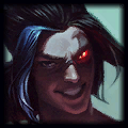
Playing Kayn When Ahead
Your lead is valuable because Kayn can choose when a fight starts and when it ends. When you are ahead, do not turn into a front-line stat check unless your form, augments, and team follow-up actually support it. Use walls, fog, minion waves, and Snowball pressure to make the enemy guess where the next angle is coming from. The goal is not just to get kills. The goal is to force bad spacing, burn defensive tools, and make every reset fight start on your terms.
Trigger: the enemy backline is walking up without peel
- Action: threaten from the side wall instead of running straight down the lane. If a carry steps past their tank or uses a movement spell early, enter with your gap close, land your damage, then use your untargetable window or wall escape to break the return fire.
- Consequence: even if you do not kill them instantly, you force panic movement and defensive casts. That gives your team a clean timing to walk forward. A scared backline deals less damage because they are moving instead of hitting.
- Avoid the throw: do not chase through the entire enemy team after the first hit. If their exhaust, hard crowd control, or displacement is still available, your lead can vanish in one greedy dive. Hit the isolated target, take the cooldowns, then leave or re-enter after they waste their answer.
Trigger: your team has wave control and the enemy is stuck under pressure
- Action: stand near wall access points and threaten a flank while your team clears or pokes. Kayn is much harder to mark when he is not visible in the middle of the lane. Make the enemy choose between clearing the wave and watching every side angle.
- Consequence: this creates delayed pressure. Tanks hesitate to engage because you can bypass them, and carries hesitate to clear because you can punish the animation. That hesitation often wins more fights than a rushed all-in.
- Avoid the throw: if your minion wave is gone and your team is backing up, leave with them. Diving after the wave dies gives the enemy a clean collapse, especially if your escape path requires a wall you can no longer reach safely.
Trigger: you are ahead as Shadow Assassin-style Kayn
- Action: play for clean angles on fragile targets. You want short trades, fast picks, and exits through terrain. Choose augments that help you reach targets, refresh pressure, or survive the first counter-burst if the enemy has instant lockdown.
- Consequence: mobility and burst-focused augments cover the main weakness of this style: if you fail the first window, you can be punished hard. Extra access, haste, or defensive burst protection lets you take a second angle instead of dying after one attempt.
- Avoid the throw: do not open on the tank just because they are closest. If your damage is built to remove carries, spending everything on a durable target gives the enemy backline a free fight. Pressure the tank only when hitting them forces the carry behind them to move or when your team is already burning that target down.
Trigger: you are ahead as Rhaast-style Kayn
- Action: use your lead to control the center of the fight, but still enter after the enemy commits. Let them spend their first crowd control or mobility, then go in and keep hitting the highest-value target you can safely reach. Choose augments that add durability, healing reliability, tenacity-like safety, or sustained combat power.
- Consequence: this style wins by making the enemy over-invest into killing you while your team attacks freely. Defensive and sustain augments cover the weakness of being kited or chain-controlled before your healing matters.
- Avoid the throw: do not start a fight alone just because you are hard to kill. If your team is too far back to punish the enemy for focusing you, you are not creating space; you are donating shutdown pressure. Ping forward first, then engage when allies can hit.
Trigger: you have a kill lead but the enemy still has strong anti-dive tools
- Action: bait the answer before committing. Walk into threat range, show a side angle, or use Snowball pressure to force shields, stasis effects, knockbacks, fears, roots, or exhaust-style effects. Once those tools are down, re-enter with your real engage.
- Consequence: your lead becomes repeatable instead of coinflip. Kayn is excellent at taking two-stage fights because he can threaten, leave, and come back from a different path.
- Avoid the throw: never assume a low-health target is free if they are standing beside reliable crowd control. The enemy wants you to tunnel on the health bar. Kill the carry only when your escape route is already planned.
Playing Kayn When Behind
When behind, Kayn cannot afford heroic entrances. You are still useful, but your job changes. You stop forcing first contact and start punishing oversteps, following crowd control, and using terrain to avoid fair fights. A behind Kayn who dies first becomes useless. A behind Kayn who waits three seconds, enters after cooldowns are spent, and finishes a damaged target can still flip the fight back.
Trigger: the enemy is grouped and you cannot burst anyone
- Action: stop diving the backline from the front. Play beside your team and look for a target already hit by poke, crowd control, or Snowball engage. If no one is low and no cooldowns are spent, hold your entry.
- Consequence: you preserve health and force the enemy to respect a late entrance. Kayn behind is not weak because he lacks buttons; he is weak because bad timing lets the enemy use every answer on him at once.
- Recovery plan: choose augments that give safer access, defensive padding, or more frequent spell rotations. These do not magically make you ahead, but they let you participate without needing a perfect one-shot.
Trigger: your team is losing wave control
- Action: help clear without standing in the open for too long. Use your abilities to thin waves, then retreat toward walls or allies. Do not spend every mobility tool on minions if the enemy engage is ready.
- Consequence: stable wave control buys time for item completions, form value, and augment scaling. It also denies the enemy the easiest engage pattern: walking in with a wave while you have no room to dodge.
- Avoid the unrecoverable fight: if your team is trapped under structure or low on health, do not Snowball into five people to “make space.” Space only matters if your team can use it. Clear, heal when possible, and wait for the enemy to overextend.
Trigger: you are behind as Shadow Assassin-style Kayn
- Action: shift from assassin to cleanup. Enter after the enemy carry has used mobility or after your team lands crowd control. If you cannot kill, tag the target, force movement, and leave before the counter-burst lands.
- Consequence: you still create value by interrupting damage uptime. A carry who must kite backward is not freely attacking your front line. That can be enough for your team to win the slower fight.
- Augment cover: defensive, movement, and haste-oriented augments are more valuable when behind than pure greed. They cover the biggest failure case: entering once, failing to kill, and having no way out.
Trigger: you are behind as Rhaast-style Kayn
- Action: peel and counter-engage before you try to drain-tank. Stand near the ally the enemy wants to dive, then punish the diver with knock-up pressure, sustained damage, and body-blocking movement. Go forward only after the enemy backline has stepped into your range or after their front line is isolated.
- Consequence: you turn a losing gold state into a numbers advantage around positioning. Rhaast-style Kayn behind can still be annoying if enemies must walk through him to finish kills.
- Augment cover: durability, healing support, and crowd-control resistance style choices help you stay active long enough for your sustain pattern to matter. If you pick only damage while already behind, you may die before that damage changes the fight.
Trigger: the enemy is baiting you with low-health targets
- Action: check the map state of the fight, not just the health bar. Ask three quick questions: can my team follow, what crowd control is waiting, and where is my exit wall? If one answer is bad, do not chase yet.
- Consequence: you avoid the most common Kayn throw from behind: taking a kill that costs your life and opens the lane for the enemy. Trading one for one is rarely enough when your team is already losing pressure.
- Recovery plan: let the low target retreat if chasing would split you from allies. The enemy loses damage while they back away, and you keep your cooldowns for the next real engage.
Trigger: your team needs someone to start but you are too far behind to survive
- Action: use Snowball, wall angles, and movement to threaten engage without fully committing. Force the enemy to react first. If they waste a key spell, your tank or ranged engage can start instead, and you follow second.
- Consequence: you create pressure without becoming the sacrifice. Kayn is much stronger as the second or third body into a fight when behind because enemies have already used their cleanest lockdown.
- Avoid the unrecoverable fight: do not start into full enemy resources while your carries are clearing wave or walking back from base. A failed engage from behind usually costs more than your death; it costs the next wave, the next structure, and your team’s chance to reset.
Trigger: the game is slipping and you need one good fight
- Action: narrow your win condition. Pick one target type to punish: the overextended carry, the isolated poke champion, or the diver who goes too deep. Tell your play through movement. Stand where that target must pass, not where the whole enemy team can see you.
- Consequence: a behind Kayn wins through patience and angle discipline. One delayed entrance onto the right target is worth more than three desperate engages into the nearest champion.
- Final rule: when ahead, spend your lead to control space without giving shutdowns. When behind, spend your mobility to buy time and punish mistakes. In both states, the throw happens when you enter with no exit and no ally ready to convert your pressure.