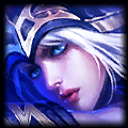
Playing Ashe When Ahead
When your team has health, wave control, or the first pick, Ashe should turn that lead into space instead of chasing damage numbers. Stand just behind your front line and keep the enemy walking through slows before they can reach your carries. If they are forced to spend movement tools just to touch the wave, you are winning. Do not walk past your tanks unless you already know the enemy engage tools are down.
Convert every advantage into a controlled choke
- Trigger: Your team wins a trade, forces enemies under tower, or kills one target. Action: Move up only as far as your next safe retreat point, then use repeated slows and poke to trap them near the minion wave. Consequence: They either give up the wave or take a bad engage through your team. Throw risk: If you step into Snowball range without vision or peel, one tank connection can flip the fight even while you are ahead.
- Trigger: The enemy frontline is low but still has engage. Action: hit the closest safe target and keep them slowed instead of tunneling the backline. Reason: Ashe wins many ahead fights by making the enemy frontline useless, not by instantly deleting carries. If their tank cannot reach your team, their backline has to choose between abandoning him or walking into your arrows.
- Trigger: Your ultimate or long-range engage is available and an enemy carry has no clean bodyguard in front. Action: fire from a position where your team can immediately follow. Consequence: A hit becomes a real fight starter, not just a highlight attempt. Avoid the throw: Do not shoot a long engage while your team is clearing wave, shopping for health relics, or backing away. A missed engage often gives the enemy the exact window they need to run at you.
Use augments to protect the lead
- If the enemy has hard dive: prioritize augments that add survivability, repositioning, crowd-control resistance, shields, or emergency movement. Ashe already brings reliable slows and pick pressure; when ahead, the main way you lose is by dying first. A defensive augment that lets you survive the first engage is often worth more than extra damage.
- If your team lacks finish: choose augments that improve sustained attacks, on-hit damage, attack speed, or safe DPS uptime. The condition is simple: if enemies are escaping at low health after your slows, you need more finishing power. If enemies are reaching you too easily, damage augments will not fix the real problem.
- If your poke is controlling the lane: haste, range, or repeated-application augments can help you keep the enemy permanently uncomfortable. Use them to hold the bridge and deny clean engages, not to stand still in the open. Ashe is still punishable when she becomes predictable.
Close games without giving shutdowns
- Trigger: You are hitting the enemy structure and they are respawning soon. Action: attack the structure from max safe range, keep slows ready for the first champion who steps forward, and leave before your frontline overcommits. Reason: Ashe is excellent at stopping exits, but weak if she is the one trapped under enemy spawn pressure.
- Trigger: Your team gets a pick near the enemy side. Action: ping or posture for the objective push immediately. Do not chase the last two enemies into deep space unless your whole team can follow. Consequence: Taking tower damage, wave control, and health relic access usually wins more than a risky extra kill.
- Trigger: You have a big bounty or are the main damage source. Action: play one step farther back than feels necessary. Let someone else face-check, absorb Snowball, or test brush control. Why: When Ashe dies first, your team loses slows, engage follow-up, and steady DPS at the same time. That is the most common ahead-to-even throw.
Playing Ashe When Behind
When behind, Ashe should stop trying to out-stat the enemy and start buying time with slows, wave control, and clean pick attempts. You are not useless just because you are behind. Your crowd control still matters. Your job is to make enemy engages awkward, punish overextension, and create one fight where your team can focus the same target.
Stabilize before looking for hero plays
- Trigger: The enemy has stronger items, more health, or better frontline control. Action: give ground early and clear waves from behind your team instead of contesting every step of the bridge. Consequence: You reduce the chance of a forced fight before your team is ready. Recovery plan: once the wave is thinned, use slows on the closest enemy to stop them from freely walking into tower or relic space.
- Trigger: Your team keeps losing front-to-back fights. Action: stop hitting whoever is deepest if your team cannot kill them, and look for a ranged pick on a carry or support walking too far forward. Reason: Behind Ashe needs target quality. Wasting all pressure on an unkillable tank lets the enemy backline play without fear.
- Trigger: An enemy diver is holding Snowball or a dash threat. Action: stand behind minions when possible, keep enough distance that a single connection does not put them directly on you, and save your strongest control for their commit. Counterplay: if they miss the engage, slow them immediately and call focus. Behind teams often win by punishing one failed dive, not by starting first.
Use augments to patch the reason you are losing
- If you are dying before dealing damage: take augments that improve durability, movement, shielding, anti-burst, or escape windows. Do not greed for pure damage when every fight starts with you being removed. Surviving two extra seconds can let your slows stack pressure and give your team time to peel.
- If you are alive but cannot influence fights: look for augments that increase attack uptime, ability frequency, range safety, or utility application. The condition matters: only choose these when positioning is already stable. If the enemy can still reach you for free, fix that first.
- If your team has no engage: value augments that make your pick attempts more reliable or help you follow your own crowd control safely. Ashe can start a comeback with one clean catch, but a catch is only real if your team can damage the target before the enemy counter-engages.
Take comeback fights on your terms
- Trigger: The enemy splits around the wave, sends one champion too far forward, or uses a key engage tool on minions. Action: immediately slow and focus that champion with your team. Consequence: Even if you do not kill them, forcing their health low can stop the siege and reset the lane. Avoid the trap: do not chase past your wave after the punish. Behind teams lose games by turning a good disengage into a desperate chase.
- Trigger: Your ultimate is available while the enemy is grouped carelessly. Action: aim for the target your team can actually reach, not the farthest carry on the screen. Reason: Behind Ashe needs guaranteed follow-up. A shorter, cleaner engage on a frontline or mispositioned bruiser can be better than a long shot that your team watches from too far away.
- Trigger: The enemy is sieging your tower. Action: thin the wave, slow the first champion who steps up, and hold your ground only while the tower or your team can punish them. Consequence: You force them to choose between hitting the structure and respecting your crowd control. Unrecoverable fight warning: if your frontline is dead or your team is too low to follow, back off and preserve the next defense instead of dying with the tower.
Do not let frustration decide your positioning
- Trigger: You are down multiple fights and feel pressured to make something happen. Action: slow the game down. Hold safe angles, farm what you can, and wait for the enemy to spend a mobility tool or miss Snowball. Reason: Ashe punishes impatience extremely well, but she also gets punished hard when she is the impatient one.
- Trigger: A teammate dives alone while you are behind. Action: help only if you can attack from safe range and the target is already controlled. If following means walking through the enemy frontline, let the play die. Consequence: Saving one bad engage is rarely worth giving the enemy a full wipe.
- Trigger: You finally win a comeback fight. Action: take the wave, structure damage, or relic control first, then reset your formation. Reason: The first won fight only gets you back into the game. The throw happens when Ashe walks too far forward after the win and gives the enemy the shutdown that restarts their snowball.