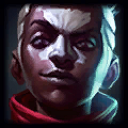
Passive - Z-Drive Resonance
Function: Ekko marks enemies when he hits them with abilities or basic attacks. When he completes the pattern on a target, he gets a burst of damage and a short speed spike. In Mayhem, that speed matters as much as the damage, because it lets you leave after a trade instead of standing in the middle of five people.
- Mayhem use: Treat the passive as your trade timer. If you can trigger it with Q and E, go in. If you cannot finish the marks, hold the dive and keep poking. Mayhem fights are messy, and half-commits are where Ekko gets punished hardest.
- Targeting or hit logic: You usually stack it with Q passing through, E dash plus empowered hit, or a follow-up basic attack. The cleanest pattern is hitting Q on the way out, using E to close, then letting the returning Q or your attack finish the passive.
- Combo role: Passive is the reason Ekko can play hit-and-run instead of pure all-in. Proc it, use the speed to dodge the retaliation, then decide whether R is needed or whether you can walk out cleanly.
- Early fight use: Early in the game, look for passive procs on frontliners only when they are already walking forward. If you step past the enemy frontline before your damage is ready, you burn health for no reset and lose lane control.
- Teamfight use: In full fights, passive is best used to delete a squishy who already used mobility or to chunk a frontliner while your team follows. Do not chase a passive proc into untouched crowd control unless your R is available.
- Counterplay: Enemies can deny clean procs by spreading, sidestepping Q return, shielding the third hit, or saving hard crowd control for your E landing spot. If they hold disables well, force them with Q and W first instead of jumping in immediately.
- Leveling priority: Passive does not get leveled directly, but it scales with your ability access. Maxing your main damage spell first makes passive trades easier to finish, while later points in mobility and utility decide how safely you can trigger it.
- Punishment for wasting it: If you start a trade and fail to proc passive, you are just a melee champion in enemy range. Back out fast, stop auto-chasing, and wait for Q or E before trying again.
Q - Timewinder
Function: Ekko throws a time device that damages enemies as it travels out, then returns to him and can hit again. It slows at its far point, so good Q placement creates both damage and a small control zone.
- Mayhem use: Q is your safest way to play the bridge. Use it to check forward movement, punish clumped enemies, and set up passive without spending E. In Mayhem, where fights start quickly, throwing Q too late often means you are already being engaged on.
- Targeting or hit logic: Aim where the enemy wants to move, not where they are standing. The return path is the important part. If you cast from an angle, you can force enemies to choose between dodging the first hit and walking into the return.
- Combo role: Q starts most of Ekko’s practical combos. Q into E gives you a fast passive proc if the return connects. W into Q can cover a trapped area and punish anyone who hesitates inside the zone. R can also reposition your return path if the fight gets chaotic.
- Early fight use: Early, use Q to farm, poke, and soften the frontline. Do not throw it randomly into minions if the enemy has engage ready; without Q, you lose your best spacing tool and your passive setup becomes much riskier.
- Teamfight use: In teamfights, throw Q through the first target and toward the backline path. Even if you do not reach a carry, the return can split their formation and make your E angle easier. If your team has follow-up crowd control, cast Q through that area before diving.
- Counterplay: Enemies can sidestep sideways, dash past you to break the return angle, or hide behind minion flow to reduce your pressure. Good players will punish you right after Q misses, because they know your burst pattern is incomplete.
- Leveling priority: Q is usually the first priority because it gives wave control, poke, and reliable damage setup. In Mayhem, that early control keeps Ekko from being forced into bad melee trades before he is ready.
- Punishment for wasting it: A missed Q removes your safest damage and makes your E obvious. If it whiffs, step back, wait for your team’s pressure, and do not dash in just to “make something happen.”
W - Parallel Convergence
Function: Ekko creates a delayed zone. When it activates, enemies inside are stunned if Ekko enters the zone, and Ekko gains a shield. The spell is powerful, but it is also telegraphed, so it rewards prediction more than reaction.
- Mayhem use: W is your fight-shaping spell. Use it on choke points, retreat paths, enemy carries who must step up, or directly behind your own frontline when the enemy wants to engage. In Mayhem, people move constantly, so casting W where the fight will be is better than casting it on the target’s current feet.
- Targeting or hit logic: The enemy sees the warning late, but they can still leave if you place it poorly. The best W casts are hidden by combat clutter, minion waves, allied crowd control, or your own movement from fog-like angles on the bridge.
- Combo role: W can be used before E for an engage, before R for a snapback trap, or defensively on yourself when divers commit. If the stun lands, Q and passive follow easily. If only the shield lands, it can still buy enough time to finish a trade or survive until R.
- Early fight use: Early, do not fish for miracle stuns every time. Use W to protect your team from engage or to zone enemies off low-health minions and relic movement. A defensive shield can win a small trade even when the stun misses.
- Teamfight use: In full fights, W should either cut off the enemy backline or cover your own exit. If you dive without W available, you are relying only on R to survive. If you cast W behind the enemy and then threaten E, they often split, which gives your team a cleaner fight even before the stun lands.
- Counterplay: Enemies beat W by walking out early, holding displacement for your entry, or forcing you to choose between entering the zone and eating burst. They can also bait you into dashing for the stun, then collapse when your E is gone.
- Leveling priority: W is usually leveled after Ekko’s main damage and mobility needs, because its value is tied to placement and timing more than raw rank. Still, the spell becomes more important as teamfights get larger and enemies group tighter.
- Punishment for wasting it: If W is down, your engage threat drops hard. Play slower, poke with Q, and avoid being the first champion into the enemy team unless your R position is safe.
E - Phase Dive
Function: Ekko dashes, then his next attack is empowered and blinks him to the target. This is his main access tool, his passive finisher, and the spell that decides whether a trade is clean or doomed.
- Mayhem use: E is not just a gap closer. Use the first dash to dodge skillshots, cross small spacing gaps, or change Q return angles. Use the second part only when the target is worth entering melee range for. In Mayhem, enemies are rarely isolated for long, so choose the landing spot before you click in.
- Targeting or hit logic: The empowered hit needs a valid target. If the enemy dashes away, becomes untargetable, or moves behind protection, you may be left short. Aim E at targets already slowed, stunned, trapped by terrain pressure, or busy casting.
- Combo role: E is the bridge between setup and burst. Q first, then E when the enemy is committed to a path. W first, then E if you can enter the zone as it activates. After E lands, finish passive and leave with the speed boost unless the kill is guaranteed.
- Early fight use: Early, save E for punishing a missed enemy spell or finishing a low target. If you use E just to poke a full-health tank, the enemy backline gets a free window to hit you while you retreat.
- Teamfight use: In teamfights, E should usually follow someone else’s pressure. Let your tank, poke, or W force movement, then dive the target who has already spent a defensive tool. If you E first into five ready champions, you force yourself to R defensively and lose your kill threat.
- Counterplay: Enemies can punish E by saving roots, knockups, silences, or burst for your blink landing. They can also peel the target you choose, making your passive proc too slow. If they are holding peel, threaten E without taking the second part until they waste something.
- Leveling priority: E is commonly prioritized after Q because it improves Ekko’s ability to reach and finish targets. If your team already has strong setup, earlier E value feels better; if you are being outranged, Q control still matters first.
- Punishment for wasting it: A wasted E is the easiest way to die on Ekko. Without it, you cannot choose fights, dodge reliably, or finish passive quickly. Back up immediately and let your cooldowns return before standing near enemy engage range.
R - Chronobreak
Function: Ekko rewinds to a previous position, heals himself, and damages enemies near the return point. It is both a bailout and a massive punish tool when enemies fight on top of his afterimage.
- Mayhem use: R changes how brave you are allowed to be, but it does not make bad dives good. Track your afterimage before committing. If it is behind your team, R is a safe reset. If it is in the enemy team, R can be a bomb. If it is somewhere useless, play like you do not have an ultimate.
- Targeting or hit logic: The damage happens where Ekko returns, not where he casts from. Enemies who watch the afterimage can spread or step away. You get the best hits when they are locked in a fight, chasing you, or standing inside your W zone.
- Combo role: R can finish a dive, dodge lethal burst, re-enter a W area, or reset after triggering passive. A strong pattern is diving with E, forcing enemies to collapse, then using R when they overcommit onto your previous position.
- Early fight use: Once R is available, you can take sharper trades, but you still need an exit plan. Do not spend R for a tiny heal after a bad poke trade unless it prevents a death or saves the next fight from starting at low health.
- Teamfight use: In teamfights, hold R until it changes the fight. Use it to dodge the enemy’s biggest burst, punish a clump, or return to safety after killing a carry. If your team is winning the front-to-back fight, you may not need to dive at all; keep R as insurance and force enemies to respect the rewind.
- Counterplay: Enemies counter R by tracking the afterimage, delaying burst until after you use it, spreading away from the return point, or crowd controlling you before you can cast. If they have reliable lockdown, avoid spending E too deep unless R can be cast before the chain control starts.
- Leveling priority: Put points into R whenever possible. The safety, damage threat, and reset power define Ekko’s mid and late fights in Mayhem, especially when both teams are permanently grouped.
- Punishment for wasting it: When R is down, Ekko loses his biggest permission tool. Stop frontlining, stop baiting five people, and play around Q poke plus W zoning until it returns. If you keep diving without R, the enemy only needs one clean crowd control chain to remove you.