Mayhem vs ARAM Comparison
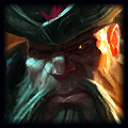
Gangplank changes more in Mayhem than he looks at first. In normal ARAM, he often plays like a scaling poke champion: farm safely with Parrrley, set barrels behind the wave, wait for enemies to walk into a chain, and use Cannon Barrage to swing grouped fights. In Mayhem, that slow setup style gets punished harder. Fights start faster, engage angles appear more often, and augments can make both your burst windows and enemy dive windows much more extreme. You are still a barrel champion, but you cannot play like every fight will politely happen in front of your minion wave.
Role and job
- Normal ARAM: Gangplank is usually a backline artillery carry with strong zone control. He chips with Parrrley, threatens barrel chains, and turns narrow bridge fights with Cannon Barrage. If enemies respect barrels, he buys space even without hitting them.
- Mayhem: he becomes a burst-control carry who must constantly reposition. Your job is not just to poke. You need to punish overcommitted divers, protect your own carries with barrels, and use Cannon Barrage to break chaotic fights before they fully collapse onto your team.
- Main difference: normal ARAM rewards patience. Mayhem rewards fast judgment. If you hold barrels forever looking for a perfect chain, the fight may already be decided by augments, Snowball follow-ups, or a hard engage from fog.
Skill use
- Barrels are less “set and forget” in Mayhem. In normal ARAM, placing a barrel near the wave can stall enemies because the bridge is predictable. In Mayhem, players often have stronger access tools or more reason to force through damage. Put barrels where the fight is about to happen, not only where the wave currently is.
- Use Parrrley as a trigger, not just poke. In normal ARAM, repeated Q poke can be enough to win space. In Mayhem, single-target poke is less reliable unless it leads into a barrel hit, executes a low-health target, or denies an engage. If you spend Parrrley on a tank every time it is available, you may not have it ready when your barrel chain becomes lethal.
- Remove Scurvy is more valuable as a recovery button. Normal ARAM often lets Gangplank sit far enough back that W is mostly used after stray crowd control. In Mayhem, saving it for the crowd control that actually enables death matters more. Do not waste it on light poke if an engager is still holding the spell that lets their team reach you.
- Cannon Barrage needs earlier use. In normal ARAM, many players wait until enemies are already grouped and low. In Mayhem, cast it when the engage path is forming: on your backline when divers commit, on the enemy exit route after your team lands crowd control, or across the center of the fight to split front line from carries. Late ults often just decorate a lost fight.
Skill order and priority
- Normal ARAM habits usually lean toward reliable Parrrley pressure. That still has value, especially when your team lacks safe poke or when enemies cannot easily start fights.
- In Mayhem, barrel reliability matters more than comfort poke. If the lobby is full of dive, mobility, or short-range brawlers, prioritize the setup that gives you the best explosive control around Powder Keg. Your damage is only useful if you can actually place, protect, and detonate barrels before being forced out.
- Do not follow one fixed order blindly. If enemies are letting you Q for free, take the lane control. If they are constantly entering melee range, your barrel placement and W timing decide fights more than small poke advantages.
Tempo and wave rhythm
- Normal ARAM gives Gangplank more time to scale into clean barrel fights. You can thin waves, farm safely, and wait for enemy mistakes near the minion line.
- Mayhem tempo is less forgiving. Waves are still important, but the real tempo often comes from who can force first and who has augments that reward immediate fighting. When your team wants to engage, move barrels forward before the fight starts. When your team is weak, keep barrels behind your front line and make the enemy pay for crossing into you.
- The wrong habit is farming while your team is already committing. In normal ARAM, catching one more minion with Parrrley can be fine. In Mayhem, being half a screen late to the first burst window can cost the whole fight. If allies are posturing aggressively, prepare barrels instead of last-hitting by reflex.
Augment impact
- Augments can push Gangplank toward very different versions of the same champion. Damage-focused options make your barrel hits and Parrrley follow-up more threatening, while defensive or sustain-oriented options can buy the extra second needed to cleanse, kite, and set the next keg.
- Do not treat augments as fake ability changes. They do not magically make bad barrels good. If an augment increases your damage profile, you still need clean spacing and a protected detonation. If an augment improves survivability, you still die when you cleanse the wrong crowd control and stand inside enemy follow-up.
- Read enemy augments too. If divers have tools that make their first contact stronger, place barrels defensively and keep Cannon Barrage ready for your own backline. If enemy carries are building around long-range poke or reset-style fights, use barrels to deny their safe zones instead of only fishing for highlight chains.
Snowball use
- Normal ARAM Gangplank often ignores aggressive Snowball use. He is not a natural dive champion, and taking Snowball in without a plan usually gets him killed.
- In Mayhem, Snowball is more situational but more punishing. Use it to follow a confirmed low-health target, reposition after your team has already started the fight, or threaten a surprise barrel angle when enemies have spent their key crowd control. Do not use it as your first engage unless your team can instantly cover you.
- Snowball can also be defensive in practice. Landing it on a frontliner can create a pressure threat without taking it. Sometimes the best play is making enemies back away from your barrel zone because they know you can recast and detonate from a new angle.
- The bad Mayhem habit is panic recasting. If you take Snowball into five enemies with no barrel prepared and W already needed, you are not being creative. You are donating shutdown gold and removing your team’s zone control.
Item and rune logic
- Normal ARAM Gangplank can often build for scaling damage and trust bridge spacing. The enemy has fewer ways to repeatedly force messy all-ins, so greedy damage patterns are easier to protect.
- Mayhem asks whether you can live long enough to deal damage. If enemies have heavy dive, burst, or reliable crowd control chains, mix in enough durability, cleanse discipline, or sustain logic to survive the first contact. Full greed is only good when your team has peel or the enemy cannot reach you cleanly.
- Damage is still the point. Do not overcorrect into a build that makes barrels ignorable. Gangplank needs enemies to respect his explosion zone. The balance is simple: build enough threat to punish a clump, then enough safety to get a second rotation when the fight does not end instantly.
- Rune choices should match the lobby’s fight length. If fights are short and explosive, value front-loaded damage and immediate impact. If both teams have sustain, shielding, or durable front lines, runes that help repeated trades and extended fights become more useful. Do not copy a normal ARAM page if the Mayhem lobby is clearly playing at a different speed.
Teamfight spacing
- Normal ARAM spacing is mostly horizontal. You stand behind your team, control the lane with barrels, and punish enemies walking through the choke.
- Mayhem spacing is more layered. You need a front barrel to threaten enemies, a safer barrel near your carries to punish dive, and enough distance that you are not the easiest target. If all your barrels are forward, assassins and bruisers get a free path to you. If all your barrels are defensive, enemy carries get to hit your team without pressure.
- Stand near terrain and allies, not alone in open space. Gangplank can cleanse one key effect with W, but he cannot cleanse bad positioning. If enemies can hit you, force W, then hit you again before you set a barrel, you positioned too close.
- Use Cannon Barrage to control spacing when barrels cannot. If a fight scatters too quickly for a clean chain, ult the zone that decides movement: your carry’s feet, the enemy backline’s retreat path, or the corridor between their front line and damage dealers.
ARAM habits that become wrong in Mayhem
- Wrong habit: only playing for max-range barrel chains. In Mayhem, enemies may not give you slow, straight-line setups. Use short defensive barrels, one-barrel punish zones, and prepared chains around your own backline.
- Wrong habit: using W as soon as any crowd control lands. Hold it for the effect that actually lets enemies kill you. If you cleanse a minor slow and then get locked down by the real engage, you lose the fight before your damage matters.
- Wrong habit: ulting only for kills. Cannon Barrage is often better as a fight breaker. If it stops a dive, separates a frontline, or traps enemies inside your team’s damage, it has done its job even without finishing someone.
- Wrong habit: farming safely while allies trade cooldowns. Mayhem fights can snap open fast. When your team steps forward, your barrel threat must already be there. Arriving after the first engage means you are just cleaning a losing fight.
- Wrong habit: assuming poke wins by default. Normal ARAM often rewards repeated chip damage. Mayhem gives more chances for enemies to force through poke and start anyway. Your poke needs to connect to a larger plan: soften a target, zone a path, bait an engage into barrels, or set up Cannon Barrage.
The clean Mayhem Gangplank plays faster without becoming reckless. Keep barrels relevant to the next fight, save W for the crowd control that matters, cast Cannon Barrage before the fight is already lost, and treat Snowball as a tool for confirmed angles rather than a license to dive. Normal ARAM Gangplank can wait for the perfect bridge moment. Mayhem Gangplank has to create the moment before the lobby explodes around him.