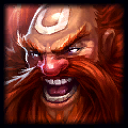
Gragas Detailed Ability Guide
Gragas in ARAM: Mayhem is a disruptive mage-bruiser who wins fights by making enemy positioning messy. He can poke, peel, start fights, split a backline, and punish anyone who walks too close to a wall or a clumped wave. His strength is not just raw damage. It is the threat that one good Body Slam or Explosive Cask can instantly turn a safe carry into a free target.
Passive - Happy Hour
- Function: Gragas heals himself after using an ability. This gives him real staying power in constant bridge fighting, especially when he is trading short instead of committing to every engage.
- Mayhem use: In Mayhem, fights tend to restart quickly and poke adds up fast. Use your spells with purpose so the passive keeps you healthy between brawls. If you throw abilities randomly into empty space, you lose both pressure and the sustain cycle that lets Gragas keep walking forward.
- Targeting or hit logic: The passive does not need a target. It rewards spell use, so the important part is timing. Cast when you can gain something: Q for zone, W before a trade, E to interrupt, or R to force a kill angle.
- Combo role: Passive healing is what lets Gragas take a short trade, back off, then re-enter before the enemy has fully recovered. A common pattern is W prep, E in, Q or R for follow-up, then step out while the heal helps absorb return damage.
- Early fight use: Early on, do not spend every spell just because you can. Use Q to contest space and W to soften incoming poke. If you keep your health high, your first real E engage becomes much harder for the enemy team to punish.
- Teamfight use: During full fights, passive healing helps you survive after the first engage. If you dive too far and blow every spell at once, the heal will not save you from five champions hitting you. Use terrain, minions, and your own frontline timing so you can get multiple spell cycles.
- Counterplay: Enemies punish Gragas by forcing him to waste spells before the fight, then engaging while his tools are missing. Long-range poke also reduces the value of his passive if he cannot safely answer with useful casts.
- Leveling priority: Passive is not leveled directly. Its value rises with better spell access and smarter cooldown management.
- Punishment for wasting it: If you spam spells into nothing, you drain your own threat. The enemy can walk up while E or R is unavailable, and you will be just a large melee champion trying to retreat through poke.
Q - Barrel Roll
- Function: Gragas rolls a barrel to a target area. It can be detonated to damage and slow enemies, and it becomes more threatening if enemies are forced to stay near it.
- Mayhem use: Q is your main space-control spell. Place it where enemies want to stand, not only where they already are. On the narrow ARAM lane, a barrel near the minion wave, health relic path, or choke point forces carries to choose between taking a worse route or risking the slow into your engage.
- Targeting or hit logic: Aim Q slightly behind retreating targets when your team is moving forward. Aim it in front of advancing bruisers when you need to slow their entry. If an enemy has a dash ready, do not rely on a max-range barrel alone; pair it with E, allied crowd control, or terrain pressure.
- Combo role: Q sets up your burst and makes your other spells easier to land. E into Q is reliable when the enemy is already slowed or body-blocked. R into Q can punish targets displaced back into the barrel area. Q also gives you a safe follow-up after you peel with E.
- Early fight use: Use Q to thin waves and chip enemies who stand near minions. Do not throw every barrel at maximum range if the enemy has easy sidesteps. A barrel placed on the wave can force multiple enemies to move, which often creates the opening for a Snowball or Body Slam engage.
- Teamfight use: In teamfights, Q is best when it cuts off escape or punishes a clump after allied crowd control. If your team is engaging, place Q behind the enemy frontline so their carries cannot kite backward freely. If your team is being engaged on, place it between your carries and the enemy divers to slow the chase.
- Counterplay: Enemies can walk out before detonation, dash through the danger zone, or bait you into detonating early. Mobile carries will often save movement tools until after they see where the barrel lands.
- Leveling priority: Q is usually the main priority when Gragas is playing for poke, wave control, and reliable damage. If your build or team role demands heavy engage, E may compete for priority, but Q still remains central to his lane control.
- Punishment for wasting it: A missed Q removes your safest way to affect the fight. Without the slow or zone, your E becomes easier to dodge and your team loses a key tool for controlling the narrow lane.
W - Drunken Rage
- Function: Gragas drinks, reducing incoming damage for a short window and empowering his next basic attack. This is his pre-fight durability and close-range burst tool.
- Mayhem use: W is strongest when cast before damage lands. Use it as you walk up, before you Body Slam, or when you expect poke to hit while you contest space. In Mayhem’s frequent skirmishes, a well-timed W lets you trade like a bruiser even when building for ability damage.
- Targeting or hit logic: The cast is self-targeted, but the empowered attack needs a reachable target. Do not channel it in a spot where the enemy can simply back away and deny the hit. Use brush, minion cover, allied crowd control, or your E impact to guarantee the follow-up attack.
- Combo role: W should often come before E. W, then E into a target, then land the empowered attack while they are displaced or unable to freely kite. Add Q for slow and R if you need to knock the target back into your team or away from their peel.
- Early fight use: Early fights are often decided by health advantage. Cast W before taking a poke trade or before stepping into melee range. If you wait until you are already low and crowd controlled, you may not get full value from the damage reduction or the empowered hit.
- Teamfight use: In a full engage, W lets you survive the first burst while you deliver E or R. When peeling, W before standing between your carry and an enemy diver. You want the enemy to waste damage on a Gragas who is already braced, not on your backline.
- Counterplay: Enemies can back away when they see Gragas drink, kite the empowered attack, or crowd control him before he reaches a target. If they force W early, they can wait out the defensive window and then commit.
- Leveling priority: W is usually leveled after Q and E unless your plan is heavy melee trading. It gains value when you are forced to frontline often, but it does not replace the engage power of E or the control of Q.
- Punishment for wasting it: If you cast W too far away, the enemy can disengage and re-engage once the protection is gone. If you forget to use it before diving, you take full return damage and may die before your combo matters.
E - Body Slam
- Function: Gragas dashes forward, colliding with an enemy to damage and disrupt them. This is his most important non-ultimate playmaking spell.
- Mayhem use: E is the button enemies must respect. On the ARAM bridge, one clean Body Slam can interrupt a diver, catch a carry, or stop an enemy engage before it starts. Hold it when the enemy has obvious dash champions waiting to jump in. Sometimes not casting E is what keeps your backline alive.
- Targeting or hit logic: E stops when it hits a valid enemy, so minions and frontline bodies can block the angle. Look for side angles, openings after the wave thins, or targets pinned near terrain. Do not dash straight through a full minion wave expecting to reach the carry behind it.
- Combo role: E is your combo starter and your emergency brake. W before E for a stronger trade. Q after E to slow the target’s escape. R after E can knock a caught enemy deeper into your team or scatter the rest of their formation. Snowball can also create the distance needed to land E from an unexpected angle, but only take the reactivation if your team can follow.
- Early fight use: Early E should be used carefully. If you miss, you are standing close to the enemy team with no dash and no reliable peel. Look for enemies who step past their minions, cast long animations, or chase too far after poking.
- Teamfight use: In teamfights, decide your job before casting. If your carries are threatened, save E for the diver and deny their entry. If the enemy backline is exposed, E can start the fight, but only when R, Flash, Snowball, or allied follow-up can finish the play. A half-engage that leaves you alone usually loses the fight.
- Counterplay: Enemies can hide behind minions, bait the dash, sidestep at max range, or hold crowd control for your landing spot. Champions with fast disengage can make you miss, then punish your long walk back.
- Leveling priority: E is commonly prioritized early when Gragas needs lower downtime on engage and peel. If your team lacks initiation, investing in E value is very important. If your team already has engage and needs poke, Q can take priority first.
- Punishment for wasting it: Missing E is one of the biggest Gragas punish windows. The enemy can immediately engage, walk past you, or force your ultimate defensively. Treat E like a loaded threat, not a movement spell for convenience.
R - Explosive Cask
- Function: Gragas throws a cask that explodes in an area, damaging enemies and knocking them away from the center. It is a fight-winning displacement tool when aimed well and a fight-losing mistake when aimed poorly.
- Mayhem use: R is your biggest way to break formations in Mayhem. Use it to throw a carry into your team, knock divers away from your backline, split tanks from damage dealers, or punish enemies stacked in a choke. The narrow lane makes displacement brutal because enemies have fewer safe paths to recover.
- Targeting or hit logic: The direction enemies move depends on where they are relative to the explosion center. Aim behind a target if you want to knock them toward your team. Aim between your carry and an enemy diver if you want to push the diver away. Avoid panic-casting directly on top of a target unless you are sure the knockback direction helps.
- Combo role: R can start or finish combos. E into R is strong when you can control the target’s position first. R into Q works when the cask knocks enemies into a barrel zone. R can also disengage after you miss E, but using your ultimate only to cover a bad engage is a costly recovery plan.
- Early fight use: When R first becomes available, look for simple plays. Knock one overextended target into your team instead of trying to hit all five enemies. A clean single-target cask often wins more fights than a flashy multi-target cast that saves the enemy carries by launching them away from your damage.
- Teamfight use: In full teamfights, patience is everything. If the enemy team has one fed carry, hold R until they step near the front or get locked by allied crowd control. If your backline is under attack, use R defensively and reset the fight. If enemies clump after your tank engages, throw R to scatter peel and isolate the highest-value target.
- Counterplay: Enemies can spread out, stand behind tanks, use spell shields or untargetable effects if available, and watch your cast angle. Good opponents will also bait R by stepping forward, then retreating before your team can follow the displacement.
- Leveling priority: Level R whenever possible. Its value is not just damage; it changes the shape of every fight and gives Gragas threat even when enemies are too scared to stand near his E range.
- Punishment for wasting it: A bad R can save enemies, knock them out of allied skillshots, or push a diver closer to your carry. Once it is down, the enemy backline can position more aggressively because your strongest displacement threat is gone.
Play Gragas around threat windows. Q controls where enemies can stand, W lets you survive the trade, E decides who gets to move, and R decides where the fight happens. If you spend those tools separately with no plan, he feels clumsy. If you hold them for the right step forward, Gragas turns the bridge into a very uncomfortable place for the enemy team.