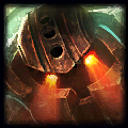
Team Synergy
Lux wants teammates who make her skillshots unfair. Her best teams give her front-line vision, reliable crowd control before her binding, and a safe reset point after she throws her burst. She also needs someone else to start fights, because walking forward to fish for picks is the easiest way for Lux to get punished in ARAM: Mayhem. The strongest partners either hold enemies in place for her combo, clump targets inside her area damage, or buy enough space for her to keep shielding and poking.
1. Amumu
- Synergy mechanism: Amumu gives Lux the one thing she values most: a clean engage that groups enemies together. When he commits, enemies usually have to spend mobility, cleanse effects, or defensive tools immediately, which makes Lux’s follow-up much easier to land.
- Combo: Amumu engages first, Lux places her slow zone across the escape path, then fires binding at the trapped or retreating target. If Amumu catches multiple enemies, Lux can layer her burst and laser through the same line instead of gambling on a max-range pick.
- Best scenario: This pairing is at its best when the enemy team has several short-range champions trying to walk through the lane together. Amumu forces the clump, Lux punishes the clump, and her shield can help the team survive the counter-damage after the engage lands.
- Enemy answer: Enemies will try to spread wide, hold displacement for Amumu, or bait him into engaging before Lux is in range. They may also send one tank forward to absorb Lux binding while carries stand behind minions or off-angle.
- Failure risk: If Amumu goes in too deep while Lux is clearing the wave or repositioning, the combo becomes a 4v5 dive. Lux also struggles if Amumu starts fights behind enemy terrain angles where her line spells cannot pass cleanly.
- Recovery: If the engage misses, Lux should not chase to “fix” it. Drop the slow zone between Amumu and the enemy team, shield his retreat path, and hold binding for whoever dashes after him. Turning the enemy’s punish attempt is often better than forcing the original play.
2. Jhin
- Synergy mechanism: Jhin and Lux create a long-range pick lane where one hit confirms the other. Lux binding gives Jhin an easy target, and Jhin’s own crowd control or follow-up threat pressures enemies to dodge in predictable lines.
- Combo: Lux can fish with slow zone first to make sidestepping awkward, then bind the slowed target for Jhin’s follow-up. If Jhin starts the chain, Lux should aim slightly behind the controlled enemy, because most players flash or dash backward once they realize both carries are lining up damage.
- Best scenario: This duo shines against fragile backlines that cannot face-check brush or walk through mid without a tank escort. Once one enemy is chunked, Jhin’s execute pressure and Lux’s laser threat make the next wave very hard for the enemy team to contest.
- Enemy answer: The clean answer is hard engage. If enemies bring multiple divers or a fast frontliner, they will try to ignore the poke war and collapse before Lux and Jhin can set up a second spell rotation. Spell shields, minion cover, and side-to-side spacing also reduce the pick threat.
- Failure risk: The lane can become too passive. If both players only fish from max range while the enemy tanks absorb everything, the team may lose ground and get trapped under turret pressure with no real engage.
- Recovery: When picks are not landing, Lux should shift from hero shots to wave control and peel. Clear minions, shield Jhin during trades, and save binding for the first enemy who crosses the minion line. Jhin can then punish the diver instead of chasing low-probability backline shots.
3. Jarvan IV
- Synergy mechanism: Jarvan gives Lux a fixed fight shape. His engage creates a boundary enemies must escape, and that makes Lux’s area damage and straight-line burst much easier to place. He also threatens the backline in a way that forces carries to stop freely dodging Lux spells.
- Combo: Jarvan starts with his engage or traps a priority target, Lux immediately places slow zone inside or across the exit, then follows with binding once the enemy commits to a direction. Her laser is best used after the target has spent mobility or when multiple enemies are stuck in the same corridor.
- Best scenario: This is strongest when Lux’s team has enough damage to delete the trapped target before the enemy counter-engage arrives. Jarvan does not need a perfect five-person start; catching one carry or forcing two enemies into the same narrow space is already enough for Lux to take over.
- Enemy answer: Enemies will hold flashes, dashes, or displacement to escape the trap, then re-engage onto Lux while Jarvan is separated. Some teams will also bait Jarvan into trapping a tank, making Lux spend burst on a low-value target.
- Failure risk: Jarvan can accidentally split Lux’s damage if he engages beyond her angle or blocks the team from following. Lux is not a champion who wants to walk into the trap area late; if she has to step forward after the fight starts, assassins get a clean window.
- Recovery: If Jarvan catches the wrong target, Lux should use the zone as a disengage tool instead of overcommitting burst. Shield the allied group, bind the first enemy leaving the trap, and reset behind the minion wave. The next Jarvan threat is still useful if Lux keeps her health bar intact.
4. Seraphine
- Synergy mechanism: Seraphine doubles down on Lux’s poke, shielding, and layered crowd control. Together they make it painful for enemies to walk forward, and they can stabilize messy Mayhem fights by shielding multiple allies while still threatening a long-range catch.
- Combo: Seraphine looks for a crowd control start or forces enemies to group with her range pressure. Lux follows with slow zone where enemies are retreating, then binding on the most valuable target that cannot freely sidestep. When Seraphine hits multiple enemies, Lux should fire through the controlled line rather than swapping targets mid-combo.
- Best scenario: This pairing is excellent when the team already has a frontliner and wants to win extended lane control. Lux and Seraphine can clear waves, protect carries, and punish enemies who try to engage through a narrow lane without full health.
- Enemy answer: The enemy answer is either heavy dive or patient sustain. If they can heal through poke or rush both backliners at once, Lux and Seraphine may not have enough immediate stop power unless their frontline is ready.
- Failure risk: Too much backline utility can leave the team with no one willing to step forward. If Lux and Seraphine are the only control champions, enemies can wait for one missed spell and then force through the gap.
- Recovery: Play closer together but not stacked. Lux should save binding for the diver Seraphine cannot stop, while Seraphine covers the wider team with shields and counter-control. If poke is being out-sustained, swap focus to waveclear and objective space rather than wasting every cooldown on tanks.
5. Malphite
- Synergy mechanism: Malphite gives Lux decisive engage and a simple target call. He knocks enemies into a predictable punish window, and Lux can dump her burst without needing to create the first opening herself.
- Combo: Malphite engages when two or more valuable enemies are close enough to punish. Lux should already be positioned slightly to the side, not directly behind him, so her binding and laser line can pass through carries instead of stopping on the nearest tank. After the initial burst, she shields the team against the return damage.
- Best scenario: This combo is brutal into immobile marksmen, mages, or enchanters who rely on spacing. Malphite forces the fight to happen now, and Lux adds the follow-up damage that turns a knockup into a kill instead of just a health trade.
- Enemy answer: Good enemies will track Malphite’s engage angle and spread before he can hit multiple targets. They may bait him onto a single durable champion, then dive Lux while her main spells are used.
- Failure risk: If Malphite engages without damage backup, Lux may be forced to fire from max range into a scattered fight. Missing the follow-up after Malphite commits is costly because the team loses its biggest threat and its safest initiation at the same time.
- Recovery: If Malphite misses or only hits a tank, Lux should immediately switch to peel mode. Slow the enemy advance, bind the first champion trying to pass Malphite, and shield allies while backing into a better line. Do not chase the failed engage unless an enemy carry has already burned escape tools.
Team functions Lux needs most: reliable engage, a real frontline, anti-dive peel, and someone who can finish targets after her poke lands. She also appreciates waveclear partners when the team lacks early pressure, but waveclear alone is not enough. If Lux’s team has no champion willing to stand in front of her, she becomes a long-range gambler. If the team gives her a stable front-to-back fight, her binding, shielding, slow zone, and laser can decide the lane without her ever needing to overstep.