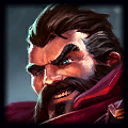
Graves is best when the fight happens at shotgun range and the enemy has to move through him to reach the wave or his backline. He punishes champions that commit in straight lines, rely on basic attacks, or need clear vision to finish a target. He struggles when the enemy can hit first from outside his dash range, lock him in place, or force him to waste Quickdraw before the real engage starts.
Targets Graves Punishes
- Yasuo: Graves can punish Yasuo when Yasuo dashes through the minion wave or commits past his frontline. Hold Smoke Screen until Yasuo starts trading, then drop it on his landing area so he has to guess where Graves is repositioning. Graves should fire after Yasuo uses Wind Wall or from an angle where the wall does not cover the pellet path. The danger window is Yasuo’s knock-up chain; if Graves gets caught before using Quickdraw, he can be deleted. The risk boundary is chasing Yasuo through a full minion wave, where Yasuo has more dash options than Graves has reload time. Damage control is simple: step back after two shots, reload behind your frontline, and re-enter only after Yasuo’s next dash target is predictable.
- Yone: Graves punishes Yone when Yone uses his spirit engage aggressively and has to return through a narrow lane. Save Quickdraw for Yone’s forward movement rather than using it to poke early. If Yone dives, Smoke Screen the area between his body and Graves’ carries, then burst him during the return path when he is forced to snap back or keep fighting in bad vision. The danger window is Yone’s layered engage with crowd control from teammates; Graves cannot outplay everything if he dashes into the middle first. The risk boundary is following Yone too deep after the spirit mark ends. Damage control is to kite sideways, keep one shot ready for the return point, and let Yone waste his burst before Graves commits his ultimate.
- Master Yi: Graves has the tools to make Yi’s reset fight awkward. Yi wants a clean first kill, so Graves should stay near allies but not stacked directly on top of them. When Yi enters with Alpha Strike, do not panic-dash forward. Wait for him to reappear, place Smoke Screen where he must continue attacking, then Quickdraw backward or sideways to force him to walk through close-range damage. The danger window is after Yi secures a takedown; Graves loses control if Yi starts chaining untargetability and movement. The risk boundary is using both dash and burst into Yi before Alpha Strike is committed. Damage control is to hold fire for his reappearance, retreat toward crowd control, and accept a defensive ultimate if it denies the first reset.
- Tryndamere: Graves can punish Tryndamere before and after the all-in because Tryndamere has to stay close to deal meaningful damage. Kite backward with short steps, use Quickdraw to break his attack rhythm, and keep Smoke Screen for the moment he is trying to stick through his ultimate window. The danger window is obvious: if Graves spends dash early and Tryndamere reaches him with slow or follow-up crowd control from teammates, Graves has little room to reload safely. The risk boundary is trying to finish Tryndamere while his survival tool is active and walking into his melee range for one extra shot. Damage control is to disengage during his invulnerability, reload, then re-engage as it ends with teammates ready to cover the final hit.
- Samira: Graves punishes Samira when she is forced to dash into short range before her defensive tools have created a reset. Keep distance until she commits, then use Smoke Screen to disrupt her target tracking and burst her from an angle after her projectile block is no longer covering the trade. Graves should not throw everything into her defensive stance; that gives her the clean opening she wants. The danger window is Samira entering with crowd control already applied to Graves’ team, because she can start stacking momentum before Graves has a clean shot. The risk boundary is standing in the center of her ultimate instead of dashing out first. Damage control is to Quickdraw away from the spin, hold burst until she is targetable and exposed, and focus her before she gets a takedown chain.
Threats That Punish Graves
- Xerath: Xerath punishes Graves by forcing him to spend health before Graves ever reaches shotgun range. Graves has to use minion cover, side angles, and Snowball pressure if available; walking straight down the lane gives Xerath free poke and makes every later fight harder. The danger window is after Graves uses Quickdraw for a small trade, because Xerath can immediately punish the fixed retreat path with long-range damage or crowd control. The risk boundary is chasing Xerath past the frontline with no dash and no vision control from Smoke Screen. Damage control is to give up a few low-value shots, preserve health, and only commit when Xerath has missed key poke or is trapped near terrain with teammates ready to follow.
- Ziggs: Ziggs punishes Graves by controlling space better than Graves controls distance. If Graves stands in the wave, Ziggs gets to damage him while also clearing the lane, which removes Graves’ best cover for approaching. Graves should avoid predictable reload pauses in the center of the lane and look for diagonal entries after Ziggs has used his main zoning tools. The danger window is turret pressure or choke fights, where Ziggs can layer area damage and force Graves to either dash forward into danger or retreat without contributing. The risk boundary is burning Quickdraw just to dodge poke, then having no movement for the real fight. Damage control is to play off the edge of the wave, let teammates start the engage, and use Smoke Screen defensively to cover a retreat when Ziggs turns the ground into a no-go zone.
- Lux: Lux punishes Graves when he is impatient with his dash. Her binding threatens the exact mid-range pocket Graves wants to occupy, and her shielded backline can absorb the first burst if Graves enters alone. Graves should bait the binding with small lateral movement, then dash after it misses rather than before. The danger window is getting rooted while reloading or after stepping forward for a close shot; that gives Lux and her team a clean burst line. The risk boundary is using Smoke Screen as poke instead of saving it to block vision during her follow-up. Damage control is to retreat behind minions, wait out the next binding threat, and re-enter from a side angle where Lux cannot line up Graves and his allies together.
- Veigar: Veigar punishes Graves by making the short-range fight hard to enter and harder to leave. Graves wants to dash in and out, but the cage can cut off both options if he commits too early. Do not Quickdraw into Veigar while the cage is available unless your team has already forced him to place it poorly. The danger window is being trapped at the edge of the cage with no dash, because Graves cannot keep firing freely while also dodging follow-up burst. The risk boundary is treating Veigar like a normal immobile mage; his zone control matters more than his movement speed. Damage control is to stop at the cage edge, reload instead of forcing through, and punish him only after the cage is down or placed behind the main fight.
- Malzahar: Malzahar punishes Graves because a single lockdown can stop Graves’ dash-and-burst pattern before it starts. Graves should avoid being the first champion seen in Malzahar’s range unless a teammate can interrupt or absorb the suppression threat. Use Smoke Screen to disrupt his team’s follow-up, not as a random poke tool, because Malzahar’s value comes from holding someone still while others deal damage. The danger window is diving past minions or frontline after Malzahar has waited out Graves’ first movement. The risk boundary is assuming Graves can burst through the spell shield and still survive the response without help. Damage control is to let allies break the shield first, enter second, and keep enough distance that Malzahar must choose between suppressing Graves or a higher-priority engage target.
In practice, Graves should hunt champions that are forced to cross his firing line and respect champions that decide the fight before he gets there. If the enemy has more poke and lockdown, play slower and enter after a cooldown is spent. If the enemy has divers and short-range carries, hold your dash, blind their commit, and make them pay for walking into the shotgun.