Passive - An Acquired Taste
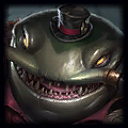
Function: Tahm Kench marks enemy champions when he damages them with basic attacks and Tongue Lash. At full stacks, his tongue and Devour access become much more threatening. This is the part of his kit that turns him from a walking wall into a real duelist.
Mayhem use: In ARAM: Mayhem, fights are often messy and short. Do not waste time slapping the enemy tank if their carry is stepping up. Walk with your frontline, tag the closest safe target, and only commit deeper when you can keep stacking without being kited into five people.
- Targeting and hit logic: Your passive rewards repeated contact on the same champion. Switching targets too early often leaves you with no payoff, so pick one enemy you can actually reach and keep pressure on them until they respect the Devour threat.
- Combo role: Passive stacks make Q and R scarier. A common pattern is auto attack, Q, auto attack, then threaten Devour if the enemy stays in range. If they panic and back up, you still created space for your carries.
- Early fight use: Early brawls are about discipline. Use minions and allies as cover, tap the nearest diver, and build stacks when the enemy overextends. Do not chase through the whole lane just because you landed one hit.
- Teamfight use: In a full fight, passive stacks let you peel or punish. If an assassin jumps in, stack them quickly and force them to retreat or get swallowed. If your team is engaging, stack the first isolated target and turn that target into the fight’s anchor.
- Counterplay: Enemies will kite you, cleanse distance with dashes, or hide behind their frontline until stacks fall off. If they are respecting you, take the win and hold ground instead of forcing a bad W.
- Leveling priority: Passive is not leveled directly, but its value rises with your ability ranks and durability. Build and skill in a way that lets you stay in contact long enough to use the stacks.
- Punishment for wasting it: If you spread stacks across three enemies, you become easy to ignore. Tahm without a stacked target is mostly a body blocking skillshots and waiting for another chance.
Q - Tongue Lash
Function: Tongue Lash is Tahm Kench’s main poke, slow, trade starter, and stack tool. It is also the safest way to interact when walking forward would get you bursted.
Mayhem use: Treat Q as your lane-control button. In Mayhem, enemies often have extra ways to force fights, so holding Q for the diver can be better than fishing blindly at max range. A landed Q buys space; a missed Q invites the enemy to walk at you.
- Targeting and hit logic: Q is a line skillshot that hits the first enemy it connects with. Minions and frontliners can block it, so angle from the side when you need to threaten a carry. If the enemy is standing inside their wave, use the threat of Q to zone rather than forcing a low-value shot.
- Combo role: Q helps build passive stacks from range and sets up close-range punishment. After you already have stacks, landing Q can create a strong catch window. If your team has follow-up damage, call the target by movement, not by hope: slow them first, then walk in.
- Early fight use: Early on, Q is your best way to trade without losing half your health. Poke the closest champion when they last-hit or step past their minions. If they dodge sideways, your team gets a free moment to push the wave.
- Teamfight use: Use Q to stop enemy momentum. Hit the diver entering your backline, slow the bruiser chasing your carry, or tag a low-health target trying to retreat. Do not tunnel on backline snipes if your marksman is being run over beside you.
- Counterplay: Opponents can hide behind minions, sidestep after your wind-up, or bait Q before engaging. Better players will watch your tongue, then start the fight while it is down.
- Leveling priority: Q is usually your highest priority because it gives the most reliable access to trades, peel, and stack application. If you cannot safely walk up, maxing anything else first makes you much easier to ignore.
- Punishment for wasting it: A missed Q removes your slow and your safest stack tool. That is the enemy’s cleanest window to poke you down, dash past you, or force your E before you wanted to use it.
W - Abyssal Dive
Function: Abyssal Dive lets Tahm Kench submerge, travel to a target area, then emerge with disruption. It is his engage tool, reposition tool, and sometimes his escape, but it is also the easiest ability to punish if used greedily.
Mayhem use: Mayhem fights reward fast engages, but Tahm should not start every fight with W. Use it when the enemy is already slowed, trapped in a narrow lane angle, or distracted by your team’s pressure. Raw W from long range is a warning siren, not a guaranteed engage.
- Targeting and hit logic: W targets an area and gives enemies time to react. Aim where they must move, not where they are standing. Cast behind a slowed target to cut off their retreat, or on top of your own carry when divers commit.
- Combo role: Q into W is more reliable than W alone. Snowball or allied crowd control can also create a better landing spot. After W lands, immediately choose between stacking the caught target or turning back to protect your backline.
- Early fight use: Early, use W more defensively unless the enemy has already spent their mobility. Diving into five people before your team is ready usually forces your E and leaves you stranded.
- Teamfight use: In teamfights, W is strongest as a second wave. Let an ally start, then arrive where the enemy is forced to clump. If your team lacks engage, use brush, minion pressure, or a Q slow first so your W does not become a solo int button.
- Counterplay: Enemies can walk out, dash away, interrupt your plan with displacement, or simply collapse on your landing spot. If they save mobility for your W, stop using it first and make them answer Q and passive pressure instead.
- Leveling priority: W is usually secondary after Q when you need more engage and map control in the single-lane fight. If the enemy team is all dive and your job is peel, its value is more about timing than rank priority.
- Punishment for wasting it: A bad W removes your main reposition tool. If you land too deep, you must spend E, ultimate, or Flash-like resources just to survive, and your carries lose their best bodyguard.
E - Thick Skin
Function: Thick Skin stores a portion of damage Tahm takes and lets him convert that stored damage into a shield. When not actively shielding, some of that stored damage can recover over time. This is why Tahm can stand in ugly trades longer than most tanks.
Mayhem use: E is not just a panic button. Use your health bar as bait, but only when your team can punish enemies for hitting you. If you absorb damage while your carries are out of range, you are not baiting; you are donating health.
- Targeting and hit logic: E targets yourself. The skill is in timing. Shield too early and enemies wait it out. Shield too late and burst may finish you before you stabilize. Watch enemy damage patterns, then press it when their commitment is real.
- Combo role: E lets you survive after W engage, after walking up for passive stacks, or after using R defensively. It also buys time for Q to come back and for allies to finish the target that overcommitted into you.
- Early fight use: Early, take short trades and let stored damage recover when possible. If you burn E for minor poke, the enemy can force a real fight while your durability tool is missing.
- Teamfight use: In teamfights, save E for burst windows. When multiple enemies turn on you after you Devour an ally or land W, shield to survive the focus and keep blocking space. If nobody is hitting you, keep E available instead of pressing it for comfort.
- Counterplay: Enemies can bait your shield, disengage, then re-engage when it fades. They can also ignore you and hit your backline, which makes your stored damage less valuable. Answer that by positioning between them and your carries, not by chasing sideways.
- Leveling priority: E becomes more important when you are the only frontline or when the enemy has heavy burst. Even then, Q usually remains the main rank priority because E does not matter if you cannot influence targets.
- Punishment for wasting it: If E is down after a fake trade, Tahm becomes much easier to burst. The enemy should immediately look to poke you low, force your retreat, or engage before you can rebuild a safe health buffer.
R - Devour
Function: Devour is Tahm Kench’s defining playmaker. It can protect an allied champion by swallowing them, or punish an enemy champion when Tahm has properly set up the required passive pressure. The ally use is often fight-winning in ARAM because one saved carry can decide the entire lane.
Mayhem use: In Mayhem, use R with a clear purpose before the fight starts. Decide who you are saving from assassins, or which enemy can realistically be stacked and eaten. If you hesitate between peel and engage, you often do neither.
- Targeting and hit logic: Ally Devour is a protective cast on a nearby teammate. Enemy Devour requires close-range access after setting up your passive condition. You cannot play it like a random hook; you need contact, stacks, and a safe exit plan.
- Combo role: Defensively, R denies the enemy’s burst window and repositions your ally out of danger. Offensively, passive stacks into Devour can remove a key target from the fight long enough for your team to reposition or finish the collapse.
- Early fight use: Early, save R for the teammate who actually carries the fight, not the first person who takes damage. If your poke mage gets clipped but can walk out, hold it. If your marksman is being hard engaged, eat them immediately and move toward safety or your team’s counter-engage.
- Teamfight use: In full fights, stand close enough to your priority ally that R is realistic. Do not chase an enemy carry while your own carry is exposed. If you use offensive Devour, make sure your team can follow when you spit the target out; otherwise you just delayed the fight and stranded yourself.
- Counterplay: Enemies can bait Devour with a false engage, then switch targets after you use it. They can also spread out so offensive Devour does not lead to a clean collapse. Adapt by holding R longer and protecting the champion the enemy truly needs to kill.
- Leveling priority: Rank R whenever available. Its value is not just numbers; it changes how enemies are allowed to engage. A Tahm with Devour ready forces assassins and bruisers to think twice before spending everything on one target.
- Punishment for wasting it: A wasted R is brutal. If you eat the wrong ally, use it too early, or go for a low-value enemy, the enemy team gets a clean window to kill your real carry. After R is down, play tighter, use Q for peel, and avoid deep W engages until your protection is back.