Game Plan
Early Levels 1-6: Hold the front, win short trades, do not over-dive
- Position: Start just ahead of your carries, not buried under the enemy turret and not hiding behind your backline. Tahm Kench is strongest early when he can threaten anyone who steps too far forward, but he still gets punished if he walks into five champions without a way back. Stand near brush or minions, then shift sideways to create Tongue Lash angles on enemy poke champions.
- Trading and poke rhythm: Look for short trades. Tag someone with Tongue Lash, walk forward only if your team can follow, then back up before the enemy burns you through your gray health. Do not force long fistfights into multiple ranged champions unless they have already used their main control tools. If they miss a hook, root, or knock-up, that is your window to step up and slap the frontline or threaten a squishy who got lazy.
- Snowball use: Early Snowball is mostly a threat, not a default engage button. Throw it at an exposed carry after their peel is down, or at a low-health target your team can instantly collapse on. If the enemy has five people standing together with crowd control ready, do not take the second cast just because it landed. Hold it, force them to respect the mark, and keep lane control.
- Augment use: If your first augment gives durability, shielding, healing, or damage reduction, play more forward and absorb poke for your carries. If it gives mobility or engage power, save it for after an enemy uses displacement or hard crowd control, then start the fight on your terms. If it gives damage, use it to punish isolated targets, but do not forget that your job is still to keep the enemy away from your backline.
- Push or stall choice: Push when your team has safe waveclear and the enemy is low enough that they cannot contest the minion wave. Stall when your backline is outranged or your team is waiting on health relics, ultimates, or key augments. Tahm can stand between the enemy and the wave, but he should not tank free poke just to hit minions. Let the wave come in if your team needs space.
- Ahead plan: If your team wins the first few trades, take brush control and make the enemy walk into your tongue range. Ping forward before using Snowball or Abyssal Dive so your damage dealers are already moving. Your goal is not only to kill; it is to make the enemy give up the wave, lose relic access, and fight under pressure.
- Behind plan: If you are getting poked out, stop fishing from the center line. Play beside your carries, save Devour for the ally who gets caught, and use your body to block follow-up damage only when you can still retreat. Do not answer every hit with a walk-forward trade. Wait for enemy cooldowns, catch the wave, and recover through safer skirmishes.
- Next move: By level 6, decide whether you are the primary engager or the bodyguard. If your team has burst and follow-up, prepare to start fights. If your carries are the win condition, stay close enough to eat or peel for them when the enemy dive arrives.
Mid Levels 7-11: Force messy fights when your team can follow
- Position: This is where Tahm becomes annoying to play against. Stand in the pocket between both teams, close enough to threaten a pick but still within range of your carries. If you stand too far forward, the enemy kites you and kills you first. If you stand too far back, your team loses space. Keep moving from side to side so the enemy cannot line up clean poke for free.
- Trading and poke rhythm: Trade around missed enemy cooldowns. If a mage uses their main control spell on the wave, walk up and threaten. If a marksman steps forward to hit turret or minions, Tongue Lash them and make them choose between backing up or eating an engage. Against tanks, do not waste everything on the first target unless your team wants a front-to-back fight. Sometimes the better play is to mark the tank, hold pressure, and wait for a carry to misstep behind them.
- Snowball use: Mid game Snowball can start fights, but it should have a plan attached. Use it on a carry with no escape, on a support standing too far ahead, or on a tank only if landing on them gives you a clean path into the enemy backline. If you mark someone and your team is clearing the wave or retreating, do not fly in alone. Tahm survives a lot, but he does not win a five-man collapse without damage behind him.
- Augment use: Use combat augments when the enemy is already committed. Defensive augments are best when you are about to soak burst or rescue a teammate; offensive augments are best after you have stuck to a target and they cannot simply walk away. If you picked an augment that rewards staying in combat, keep the fight near your team instead of chasing past the minion wave. If you picked an augment that helps engage, combine it with Snowball or Abyssal Dive only when the enemy backline has no easy peel angle.
- Push or stall choice: Push after a won fight, after forcing enemy recalls, or when your wave is large enough to protect your team from skillshots. Do not hit turret while your carries are zoned away; stand forward and make space first. Stall when the enemy has stronger poke, stronger reset pressure, or better long-range engage. In a stall, your job is to deny their engage target. Stand near the champion they want to kill and punish the first enemy who overextends.
- Ahead plan: When ahead, stop playing like a pure tank and start choking the lane. Hold brush. Walk up when the enemy tries to collect minions. Threaten Devour plays on anyone who steps into your range, and force them to spend mobility defensively before your real engage starts. If your team has turret pressure, stand between the enemy and the wave so they cannot clear safely.
- Behind plan: When behind, your best value is denying the enemy’s clean engage. Do not chase poke champions across the bridge. Let them come into your side of the lane, then turn with Tongue Lash, Devour, Snowball, or Abyssal Dive when they overcommit. Save your shield timing for real burst instead of pressing it early against chip damage. If an ally gets caught, rescue them first; only re-engage if the enemy has spent too much to secure the pick.
- Next move: By the end of this stage, identify the enemy carry who decides fights and the ally who must stay alive. Every fight should be built around one of those two ideas: either reach their carry when peel is down, or protect your carry when their dive starts.
Late Levels 12+: One bad engage decides the game, so be patient
- Position: Late game Tahm should play like a wall with a trap behind it. Stand close enough to punish the first enemy who walks too far forward, but do not give the enemy a free full-team engage onto you unless your team is ready to counter-hit. If your carries outrange theirs, bodyguard and peel. If your team lacks engage, hover near the side of the fight and look for a Snowball or Abyssal Dive angle after the enemy wastes peel.
- Trading and poke rhythm: Stop taking meaningless damage. A small poke trade can become a lost fight if you are forced to shield early or back away from your carries. Use Tongue Lash to slow the enemy’s approach, check greedy positioning, and set up your team’s damage. If you catch a squishy, commit only when your team can instantly hit the same target. If you only hit the enemy tank, decide quickly whether burning them wins the fight or just lets the enemy backline free-cast.
- Snowball use: Late Snowball is either a fight winner or a throw. Use it when it bypasses the enemy frontline and lands on a target your team can kill, or when it lets you counter-engage onto someone diving your carries. Never take Snowball into foggy or crowded space when your Devour is needed defensively. If your mark lands but the enemy holds all their control tools, let the mark expire and keep your frontline position.
- Augment use: Late game augment timing matters more than the augment itself. Use survival tools after the enemy commits burst, not while they are still poking. Use engage tools after your team is in range, not while they are clearing minions behind you. Use damage tools on priority targets, not on the first tank you can touch unless that tank is isolated and killable. If your augment gives a reset-like or repeated-fight pattern, call for a slow chase after the first kill instead of diving past enemy respawn pressure.
- Push or stall choice: Push hard after winning a fight because late death windows can end the game. Tank turret pressure only when your wave is present and your team is ready to hit; otherwise you are just donating health before the next fight. Stall when an ally is dead, when your team has no ultimates, or when the enemy has stronger immediate engage. In a stall, clear safely, protect the wave, and force the enemy to start into your Devour and counter-engage.
- Ahead plan: If ahead, do not flip under the enemy turret for a flashy pick. Walk the wave in, stand between the enemy and your carries, and punish anyone who tries to clear. Use Snowball as a zoning threat and save Devour for the moment the enemy finally panics and dives. The clean win is simple: deny waveclear, take structure, then re-engage when they are forced to fight in a bad position.
- Behind plan: If behind, play for one overextension. The enemy will often get impatient and walk past their wave to finish the game. That is your chance. Mark the diver, peel your carry, and turn the fight after the enemy spends mobility forward. Do not chase the first low target if it pulls you away from your damage dealers. Tahm wins losing games by making the enemy fight too long in the wrong place.
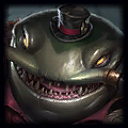
- Next move: Before every late fight, choose your first responsibility out loud in your head: engage, peel, or save. If you engage, make sure your team is in range. If you peel, stay glued to the carry the enemy wants. If you save, hold Devour until the real danger lands. Tahm Kench is at his best when he makes the enemy’s first plan fail, then turns that failed engage into a slow, ugly fight they cannot escape.