Team Synergy
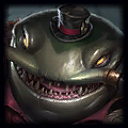
Tahm Kench wants teammates who turn his bodyguarding into a real fight win. He can buy space, escort a carry through danger, start awkward brawls, and punish enemies who overcommit into him. What he needs most is reliable follow-up damage, backline threat, wave control, and at least one teammate who can force enemies to stand in his range instead of simply walking away. If the team has only short-range damage and no engage help, Tahm often becomes a wall that gets ignored until his carries are already dead.
1. Jinx / Aphelios / Kog'Maw-style hyper carry
- Synergy mechanism: Tahm gives a fragile, high-value marksman a second chance when the enemy commits dive tools or Snowball pressure. The carry gives Tahm what he lacks: sustained damage that makes enemies regret hitting him first.
- Combo: Let the carry pressure from behind Tahm, then hold the save until the enemy has actually spent a key engage or burst pattern. If Tahm uses protection too early, the enemy can just wait it out and re-engage. If he waits until the diver is committed, the carry gets pulled out of lethal range and can immediately fire back while the diver is trapped in bad position.
- Best scenario: This is strongest into teams with one or two obvious divers, like a melee assassin, bruiser, or hard engage tank that must cross Tahm to reach the carry. Tahm stands slightly forward, so the enemy sees the marksman but has to spend resources through him first.
- Enemy answer: Good enemies will split pressure. One player baits Tahm’s protection, while another threatens the carry after it is down. Poke teams may also ignore the all-in and chip both Tahm and the carry until neither can safely hold the line.
- Failure risk: The carry can panic-flash away from Tahm or kite too far back, leaving Tahm unable to cover them. Tahm can also overchase after landing crowd control and abandon the person he is supposed to protect.
- Recovery: Reset the formation. Put Tahm between the carry and the main engage angle, not randomly in the middle of the lane. The carry should save mobility until after Tahm has absorbed or interrupted the first threat. Tahm should only chase when the carry is safe enough to keep hitting.
2. Orianna / Viktor / Azir-style control mage
- Synergy mechanism: Control mages love the space Tahm creates. Tahm’s threat zone makes enemies hesitate before walking through choke points, while the mage punishes that hesitation with area damage, zone control, and wave clear.
- Combo: Tahm steps forward to mark a target or threaten a short engage. The mage places damage where the enemy must either retreat or fight through it. If the enemy turns onto Tahm, he soaks the first wave of pressure while the mage unloads. If they back away, the team gets free minion control and turret pressure.
- Best scenario: This pairing is excellent when the enemy team is mostly mid-range and needs to walk up together. Tahm does not need to hard force every fight. He only needs to make the enemy choose between eating poke, giving ground, or committing into a prepared mage zone.
- Enemy answer: Long-range artillery can outrange the setup and hit the mage before Tahm matters. Hard flank or backline access can also bypass Tahm if the mage stands too far from his cover line.
- Failure risk: Tahm may engage beyond the mage’s damage range, turning a strong zone comp into a messy isolated brawl. The mage may also waste key area damage on tanks before Tahm has forced enemy carries into a bad line.
- Recovery: Play slower. Use Tahm as a moving wall, not a lone initiator. Clear the wave first, then let the mage hold the center of the lane while Tahm guards the side angle. If the enemy has longer range, preserve health and fight after they miss a major poke tool or overstep to hit the turret.
3. Samira / Nilah / Yasuo-style follow-up skirmisher
- Synergy mechanism: These champions convert Tahm’s messy close-range fights into clean resets or heavy burst windows. Tahm can start the scramble, absorb retaliation, and keep enemies close enough for the skirmisher to stack damage.
- Combo: Tahm threatens a forward play or catches someone who walks too close. The skirmisher waits half a beat, then enters after enemy crowd control or burst has been spent on Tahm. If the engage lands, Tahm body-blocks escape paths while the skirmisher cleans up. If the enemy counter-engages, Tahm can peel instead of continuing forward.
- Best scenario: Use this with teams that want to fight after one enemy is displaced, slowed, or forced to burn mobility. It is especially strong against squishy teams that rely on spacing rather than raw frontline durability.
- Enemy answer: Point-and-click lockdown, exhaust-style damage denial, and layered knockbacks are the cleanest answers. Enemies will try to hold one interrupt for the skirmisher instead of wasting everything on Tahm.
- Failure risk: The skirmisher dives before Tahm has drawn cooldowns, then gets focused. Tahm may also protect the wrong target; saving a full-health engager while the carry-skirmisher dies loses the whole purpose of the pairing.
- Recovery: Call the fight around enemy cooldowns, not around Tahm’s first step forward. If the skirmisher gets denied once, switch to counter-engage: let the enemy start, have Tahm absorb the entry, then send the skirmisher in when the enemy formation is already clumped and committed.
4. Amumu / Malphite / Leona-style hard engage tank
- Synergy mechanism: A second frontliner gives Tahm freedom. He no longer has to be both the opener and the bodyguard every fight. The engage tank forces enemies to group or burn mobility, and Tahm follows to lock down the aftermath or rescue the engager from overextension.
- Combo: Let the primary engager start when enemy carries are lined up or when a key poke spell misses. Tahm follows slightly behind, not beside them. If the engage hits, Tahm walks into the collapse and blocks escape. If it misses or gets countered, Tahm can peel the retreat and prevent the failed engage from becoming a full wipe.
- Best scenario: This is best into poke and marksman comps that are strong when untouched but fragile when forced into a real brawl. Two durable bodies make it harder for the enemy to kite only one target and reset the fight.
- Enemy answer: Disengage supports, terrain control, and slows can separate the tanks from the damage dealers. Enemies may also ignore Tahm and burn the backline while both tanks are too far forward.
- Failure risk: Double-frontline teams can become low-damage if the rest of the draft is also utility-heavy. Another risk is synchronized inting: both tanks dive, nobody peels, and the carries are left exposed.
- Recovery: Assign jobs before fights. One tank starts; Tahm either follows only if the carries can step up, or stays back if the enemy has strong dive. If the team lacks damage, stop forcing full engages and instead punish enemies who walk into turret range or overextend after clearing the wave.
5. Seraphine / Karma / Lulu-style enchanter or utility support
- Synergy mechanism: Utility supports make Tahm’s health bar and positioning more valuable. Shields, speed, healing, and extra crowd control let him take space repeatedly instead of winning or losing the game on one all-in.
- Combo: The support buffs Tahm as he steps into poke range, then Tahm uses that window to threaten a catch or force the enemy back from the wave. If the enemy dives past him, the support protects the carry while Tahm disrupts the nearest threat. This creates a layered defense instead of relying on one save.
- Best scenario: This pairing shines against mixed poke and engage teams. Tahm can soak and posture, while the support repairs chip damage and keeps the backline stable until the enemy gets impatient.
- Enemy answer: Heavy anti-shield or anti-heal pressure, burst combos, and long-range crowd control can break the sustain pattern. Enemies will try to force multiple defensive tools at once, then re-engage before the team fully resets.
- Failure risk: The comp may lack threat if the other three champions do not bring enough damage. Tahm plus support can survive for a long time and still lose ground if nobody punishes enemies for walking up.
- Recovery: Play around cooldown layering. Do not stack every defensive tool on the first poke hit. Tahm should take the first contact, the support covers the second wave, and the carries must step forward only when the enemy has spent engage or missed crowd control. If damage is low, focus on catching one overextended target rather than front-to-back fighting forever.
Best team functions for Tahm Kench: He needs a real damage source behind him, preferably one that can hit safely while he occupies the enemy frontline. He also needs either wave clear or engage help, because standing there without lane control lets poke comps wear him down. His best teams give him a clear job: protect the carry, follow a primary engage, or anchor a control mage zone. When the draft gives him all three, Tahm becomes miserable to break through. When it gives him none, he is durable but easy to play around.