Skill Order
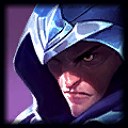
Normal order: R > W > Q > E. Put points in R whenever it is available. Max W first, max Q second, and leave E for last unless your augment setup gives it real combat value. In ARAM: Mayhem, Talon still needs a reliable way to soften targets before committing. W gives him the safest repeatable damage pattern: throw it through the wave, tag the front line, and look for a low-health target who has already spent peel.
Normal Skill Order
- Leveling priority: R > W > Q > E.
- Early setup: Have Q/W/E unlocked early, then start stacking points into W. You need all three buttons available before you play aggressively, because Talon without access tools is just walking into crowd control.
- Main max: W. Choose this when fights start at range, when the enemy has strong disengage, or when your team needs you to help clear and chip before the engage. W-first lets you play the poke-and-punish game instead of forcing every fight through Snowball or a blind flank.
- Second max: Q. Once W is maxed, Q becomes your better investment because you are now looking to finish targets rather than only mark them. Maxing Q second rewards cleaner all-ins: wait for an enemy carry to step up, land your setup damage, then commit when their peel is late or already used.
- E last. E is valuable for angles, escapes, and repositioning, but it is not your normal damage max. If you put too many early points into E without a specific reason, you lose the pressure that makes enemies respect your W and Q windows.
Standard Point Pattern
- Start with Q/W/E available as soon as possible.
- Max W first.
- Take R whenever available.
- Max Q second.
- Max E last.
If you want the compact version: W first, Q second, E last, R on rank-up. That is the default order when your augments do not clearly push another ability. It keeps Talon useful before the first real all-in, and it gives him enough damage to punish squishies who misposition behind the wave.
Augment-Influenced Skill Order
W-Max Augments: Keep R > W > Q > E
- Use W max when your augments reward poke, repeated spell hits, ability haste, or safe damage. If the augment makes your repeated casts stronger, W is usually the best way to trigger value without donating your health bar. Cast from the side of the minion wave, hit multiple champions when they stack, then back up before they answer with hard crowd control.
- Use W max when the enemy has heavy peel. If they have knockbacks, roots, silence, fear, or easy exhaust-style punishment, Q-max all-ins become risky. W-first lets you contribute while waiting for those tools to be wasted on someone else.
- Use W max when your team lacks wave control. Talon hates being forced to fight through a full enemy wave while his engage path is obvious. W helps stabilize the lane, gives your team space, and creates the small health leads that make your later burst actually stick.
Q-Max Augments: R > Q > W > E
- Swap to Q max only when your augment directly rewards committing to a target. If your setup gives extra value after dashing in, bursting one champion, or finishing low-health enemies, Q can become the correct first max. This order is for games where you can actually reach the back line, not games where you are permanently zoned by tanks and control mages.
- Q max is strongest when your team has reliable engage or lockdown. If an ally can start the fight and hold someone in place, Talon does not need as much W poke first. He can hold his entry, follow the crowd control, then use Q to cash in on the opening.
- Do not Q max into five champions who can instantly punish melee range. If every engage ends with you rooted, displaced, or exhausted before your damage lands, Q max becomes a trap. In that case, return to W max and play for chip damage until a cleaner target appears.
Early E Investment: Rare, Not a Blind Max
- Take an extra E point only when your augment or the map state makes movement the difference between killing and dying. If you are repeatedly surviving by repositioning, or if your team’s only winning fights come from side angles, an earlier E point can be justified. Still, do not fully max E before your damage spells unless the augment specifically turns that choice into combat power.
- Use E-focused play when you need flank access, not when you are behind on damage. Extra mobility does not matter if you arrive and cannot kill anyone. If your W and Q are under-leveled, enemies can ignore your entry, turn on you, and win the fight after your escape path is gone.
Adjustment Triggers
- Enemy team is squishy and your team has engage: consider Q max. You are playing to delete the first target caught by your frontline. Wait for the engage, enter second, and do not be the first champion seen.
- Enemy team has tanks, shields, and heavy peel: stay W max. Your job is to chip, mark opportunities, and punish carries only after their protection tools are used.
- You are the only reliable wave control: stay W max. If you skip W, your team can get shoved in, and Talon becomes easier to track because he has fewer safe moments to move.
- Your augment rewards repeated safe spell hits: stay W max. Force value before the fight starts, then all-in when someone is already low enough to die.
- Your augment rewards direct burst, executions, or melee follow-up: consider Q max. Only do it if you have a realistic way to enter. Snowball, allied crowd control, or enemy mispositioning must be part of the plan.
- You keep dying before reaching targets: do not double down on Q max. Go back to W priority, play slower, and use Talon as a threat instead of a coin-flip diver.
Cost of the Wrong Order
- Wrongly maxing Q first makes Talon too dependent on perfect engages. If the enemy keeps spacing well or saving crowd control for you, you spend the early game walking in, getting stopped, and offering little poke before the fight starts.
- Wrongly maxing W first can make you miss kill windows in games where your team is already locking targets down. If enemies are constantly caught and you still chose the slower poke route, they may survive with a sliver of health and punish you after your burst window ends.
- Putting too much into E early usually costs real damage. You may reach better angles, but if your W and Q are weak, the enemy carry can live through your combo and your escape becomes a retreat instead of a reset.
- Delaying R is never worth it. Talon’s ultimate is a major part of his threat, finish, and safety pattern. Take it whenever possible, because skipping it lowers both your kill pressure and your ability to leave after committing.
Default to R > W > Q > E. Move to R > Q > W > E only when your augment and team setup clearly support fast commits. Talon wins Mayhem fights by choosing the right entry, not by blindly maxing the flashiest button.