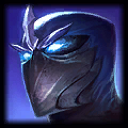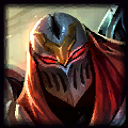
Passive - Contempt for the Weak
Function: Zed's passive adds a burst of bonus damage when he hits a low-health target. It is not a poke tool by itself; it is the execute pressure that makes his all-in lethal once the enemy has already been softened up.
- Mayhem use: In Mayhem fights, health bars move fast and enemies often get chipped before they realize they are in kill range. Watch for targets who have already spent a shield, heal, dash, or cleanse effect, then step in for the passive proc instead of opening on a full-health frontliner.
- Targeting and hit logic: The passive is tied to Zed's basic attack against a low-health enemy. If you cannot safely enter attack range, do not force it just because the target looks killable. A missed auto window often turns into getting locked down in the middle of the lane.
- Combo role: Passive is the finisher after your spell burst. A clean sequence usually lowers the target with shadows and shurikens first, then uses the attack only when the enemy is trapped, slowed, or already retreating through your team.
- Early fight use: Early on, use passive to punish enemies who walk up after taking poke. Do not burn your shadow just to chase one passive hit unless the kill is guaranteed or your team can cover your exit.
- Teamfight use: In 5v5s, passive rewards patience. Let tanks and supports absorb the first wave of control, then hit the exposed carry after their defensive button is gone. If you dive too early, the passive never matters because you die before the target drops low enough.
- Counterplay: Enemies can deny this passive by staying grouped, saving shields for the last part of Zed's combo, or stepping behind crowd control when they are low. If they kite back before you can auto, take the damage you already dealt and reset instead of overchasing.
- Leveling priority: Passive is not leveled directly, so its value comes from smart target selection and from leveling the spells that get enemies into execute range.
- Punishment for wasting it: If you walk into basic attack range without the target being low enough or controlled, you give the enemy a free punish window. Zed is dangerous when he chooses the timing; he is fragile when he begs for one more hit.
Q - Razor Shuriken
Function: Q is Zed's main ranged damage spell. Zed and his shadows throw shurikens, so the spell becomes far more threatening when multiple lines overlap on the same target.
- Mayhem use: Use Q to farm safe damage before committing. Mayhem rewards burst, but Zed still needs setup. A single shuriken can poke; double or triple shuriken pressure forces enemies to back off, spend sustain, or misposition into your next engage.
- Targeting and hit logic: Aim at where the enemy must move, not where they are standing. If your shadow is placed to one side, throw Q through the target's escape path so they have to choose between eating your shuriken or walking into your team.
- Combo role: Q is the damage check in almost every combo. W into E can slow or pressure the target, then Q should be lined up from both Zed and the shadow. After R, hold Q for a brief read if the enemy still has a dash or flash-like escape available; throwing instantly into their defensive movement wastes the kill.
- Early fight use: In early skirmishes, use Q from behind your minion wave or from a side angle created by W. Do not stand still trading Qs with longer-range champions unless your shadow angle threatens them at the same time.
- Teamfight use: In full fights, Q is not only for the marked carry. If the enemy backline stacks in a choke, a shadowed Q can hit multiple low-health targets and create cleanup opportunities. Still, prioritize accuracy over greed; one clean hit on the carry is worth more than a wide throw that clips nobody important.
- Counterplay: Opponents can hide behind minions, sidestep away from the shadow line, or save mobility for the shuriken release. They can also force Zed to throw Q while blinded by visual clutter or crowd control pressure. If they are clearly waiting for your Q, use movement and E first to bait the dodge.
- Leveling priority: Q is usually the first max because it gives Zed his most reliable poke and burst scaling pattern. If you are not landing Q, Zed's threat drops hard no matter how flashy the engage looks.
- Punishment for wasting it: A missed Q removes most of your immediate kill pressure. After whiffing, back off, reposition your shadow, and wait for the next opening instead of swapping forward into an enemy who now knows your burst is down.
W - Living Shadow
Function: W sends out a shadow that copies Zed's basic damaging spells and can be swapped to for repositioning. This is Zed's most important ability in ARAM: Mayhem because it creates angles, escape routes, and kill threats without needing to walk straight at the enemy.
- Mayhem use: Treat W as both your weapon and your insurance. If you throw it aggressively with no follow-up and no safe swap plan, you are telling the enemy exactly when they can punish you. If you place it at an angle where it threatens Q while keeping you outside engage range, the enemy has to respect you without you spending your body.
- Targeting and hit logic: Place W slightly to the side of the target, not always directly on top of them. A side shadow creates a crossfire with Q and makes sidestepping harder. A shadow behind the enemy can cut off retreat, but it is risky if swapping puts you past your frontline.
- Combo role: W enables the classic poke and burst setup: cast W, use E to apply pressure around the shadow, then aim Q so Zed and the shadow both threaten the same path. In all-ins, W can be saved after R to chase a delayed escape or to leave after the mark pressure has forced cooldowns.
- Early fight use: Early, do not spend W just to last-hit or poke a tank unless your team is safe from engage. When W is unavailable, Zed loses his best spacing tool, and enemy bruisers or supports can walk at him with much less fear.
- Teamfight use: In teamfights, W decides whether you are an assassin or a donation. Use it to attack from a flank angle while your frontline holds attention. If the enemy has point-and-click lockdown or instant peel, keep W as an exit until those tools are used.
- Counterplay: Enemies should track where the shadow is and stand away from the double-shuriken line. They can also pressure Zed the moment W is spent, because his escape and ranged threat are both weaker. If they collapse on your shadow location, do not swap into a trap just because the target is low.
- Leveling priority: W is usually not maxed before Q or E unless the mode-specific build plan demands more shadow access. Its value is already high from utility, so ability points are normally better spent increasing damage first.
- Punishment for wasting it: A wasted W is the clearest punish window Zed gives. Good opponents will step forward, force your retreat, or engage your team while you cannot threaten a fast counterkill. When W misses its purpose, play defensively until it is ready again.
E - Shadow Slash
Function: E is Zed's close-range slash, also copied by his shadows. It gives immediate area damage around Zed and the shadow, and it helps keep targets inside the dangerous zone for Q and follow-up attacks.
- Mayhem use: Use E to confirm pressure when enemies enter your shadow radius. In the tighter, faster Mayhem lane, people often clump around minions, health relic fights, or engage paths. A well-placed shadow plus E can tag multiple enemies and make your next Q much easier to land.
- Targeting and hit logic: E is not a long-range poke spell unless your shadow is already placed well. The hit area comes from Zed and his shadows, so the spell rewards shadow positioning more than raw reaction speed. Place W first, then use E when the enemy has committed to a path.
- Combo role: E sets up Q by pressuring movement and punishing enemies who stand near your shadow. It is also useful after R when you appear near the target and need immediate damage before they can fully kite away.
- Early fight use: Early on, use E with W for short trades rather than walking into melee range against champions who want you close. If you can tag them with shadow E and then Q from a safe angle, you win the trade without giving them a clean return.
- Teamfight use: In teamfights, E is strong when enemies pile onto one target or chase through your shadow. Use it to punish divers entering your backline, not only to dive theirs. Zed can peel by dropping a shadow near an ally and slashing the diver before looking for a reset angle.
- Counterplay: Enemies can avoid E by respecting the shadow radius and not clumping around it. They can also bait Zed into walking forward for a melee E, then lock him down. If they are holding crowd control, cast E from shadow range unless your escape is already secured.
- Leveling priority: E is commonly maxed after Q because it improves Zed's close-range and shadow-zone damage. In games where you cannot safely all-in, its value still stays high because it supports poke patterns and anti-dive play.
- Punishment for wasting it: If E is used too early, the enemy can move freely through your shadow angle and dodge Q without pressure. If it is used too late, the target may already be outside the zone. The spell is simple, but bad timing makes the whole combo feel toothless.
R - Death Mark
Function: R is Zed's commitment tool. He becomes untargetable during the cast sequence, marks a target, appears near them, and adds delayed burst based on the damage he applies during the mark window. It is how Zed turns poke into a kill.
- Mayhem use: In Mayhem, do not R the first champion you can reach. Pick the target whose defensive tools are already down or whose team cannot instantly peel. A carry at medium health with no escape is a better target than a low-health tank standing inside four teammates.
- Targeting and hit logic: R is targeted, so the hard part is not aiming the cast; it is choosing the moment and landing the damage afterward. Know where you will appear, where your existing shadow is, and where you can retreat before pressing it.
- Combo role: R can start the all-in, dodge a key incoming spell, or finish a target after W poke has forced them low. After using R, apply E and Q with patience. If the enemy has a dash available, wait just long enough to track it, then throw Q where they must land.
- Early fight use: Early, use R when your team can follow or when the target has no safe retreat path. If you ult deep while your team is clearing minions or backing up, you may get the mark but lose the fight because nobody can punish the enemy peel.
- Teamfight use: In full fights, R is best after the first layer of crowd control is spent. Let the enemy show their peel, then mark the carry from an angle. If your team has already started a front-to-back fight, you can also R a diver or bruiser who overcommits, burst them down, and then use shadows to threaten the backline afterward.
- Counterplay: Enemies can counter R with shields, invulnerability effects, stasis-style answers, displacement, exhaust-like damage reduction, or simply grouping so Zed cannot finish the combo safely. They should also punish his return path. As Zed, expect this. If the target has a hard answer ready, bait it with W pressure before spending R.
- Leveling priority: Put points into R whenever available. It is Zed's highest-impact kill tool and changes how enemies must position, even before you cast it.
- Punishment for wasting it: A bad R is worse than a missed poke spell because it puts Zed in the enemy formation and removes his biggest threat. If the mark fails, swap out, use terrain and teammates to break pursuit, and accept the reset. Chasing after a failed ultimate usually turns one mistake into a death timer.