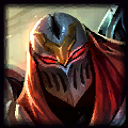
Mayhem vs Normal ARAM: Zed
Zed changes from a poke-and-pick assassin into a much more repeatable skirmish threat in Mayhem. In normal ARAM, he often waits for a low-health target, lands shadow poke, then commits when the enemy backline has already spent key crowd control. In Mayhem, the lane is usually faster, augments push champions toward sharper strengths, and fights restart before a normal ARAM Zed player would feel fully ready. You still want clean target selection, but you cannot play like a passive Q bot for half the game.
Role and job in fights
- Normal ARAM: Zed is mostly a finisher and side-angle threat. If the enemy keeps hard crowd control for him, he has to poke with Q and wait. His best fights start after allied engage, missed enemy peel, or a low-health carry stepping too far forward.
- Mayhem: Zed is more often a tempo assassin. Augments can let him threaten more often, survive more aggressively, or convert one kill attempt into a second play. That means your job is not only to delete a carry. You also pressure the enemy formation so their backline cannot freely follow the frontline brawl.
- Wrong ARAM habit: Waiting forever for the perfect one-shot can lose Mayhem fights. If your team is already fighting and the enemy peel is aimed elsewhere, you should take a controlled entry, force defensive tools, then use shadows or retreat paths to reset before going again.
Skill use: poke is still useful, but shadow discipline matters more
In normal ARAM, Zed can get value by placing W forward, throwing Q through the minion wave or into clustered enemies, and backing off. That pattern still works in Mayhem, but it is less reliable as your whole plan. Enemies may have augments that punish predictable poke, reward sustained brawling, or let them recover from chip damage. If you spend shadow only to fish for poke while a fight is about to start, you may have no real entry tool when the kill window appears.
- Use W differently in Mayhem: Treat the shadow as a fight resource first and a poke tool second. If the enemy engage is ready, keep W for spacing or dodge angles. If their crowd control has just missed, then W forward becomes a threat instead of a gamble.
- Use R with an exit plan: In both modes, Zed dies when he ults into layered crowd control without tracking the return path. In Mayhem, that mistake is punished harder because fights are messier and enemies may have extra defensive or retaliatory power from augments.
- Use E when close for commitment, not panic: If you enter and instantly mash everything into a shielded or protected target, you may lose your only burst window. Hold enough damage to punish the target after their defensive reaction if your augment or item setup supports a second hit pattern.
Skill order and leveling logic
The default logic stays close to normal ARAM: prioritize the ability that gives you reliable damage and wave interaction, usually Q first, then lean into the spell that best matches your build and augment direction. In a normal ARAM poke game, Q priority is simple because safe damage matters. In Mayhem, Q is still important, but the reason changes: you need to keep contributing between all-ins while also softening targets so your burst actually finishes.
- If your augments reward frequent spell hits or ranged pressure, keep playing around Q and shadow poke until an enemy carry drops into kill range.
- If your augments reward close-range fighting, resets, or repeated takedown pressure, your later points and play pattern should support entering more often instead of only poking from max range.
- If the enemy comp has heavy point-and-click control or layered peel, do not let a more aggressive Mayhem setup trick you into blind dives. Keep the safer order and play for punishment after they use control on your frontline.
Tempo: Mayhem gives fewer quiet minutes
Normal ARAM lets Zed spend long stretches farming energy-neutral poke, clearing waves, and waiting for someone to misstep. Mayhem tends to compress those windows. A fight can start because one augment spikes, one player finds an angle, or one side overchases after a small win. Zed benefits from that chaos if he arrives at the fight with shadow available and a target already pressured.
- Before fights: Do not waste W on low-value poke when both teams are posturing for an engage. A missed poke attempt can turn into a lost fight if the enemy starts while your shadow is unavailable.
- During fights: Enter after the first major peel tool is used, not necessarily after the enemy is almost dead. Mayhem often rewards the player who forces panic early and escapes cleanly.
- After fights: Chase only if your shadow return, Snowball position, or allied follow-up gives you a way out. Normal ARAM overchases are bad; Mayhem overchases are worse because the next counter-engage can arrive immediately.
Augment impact
Augments are the biggest difference between Mayhem Zed and normal ARAM Zed. Normal ARAM mostly asks whether Zed has enough damage and whether the enemy has enough crowd control. Mayhem asks what your augments let you repeat, survive, or punish. A damage-focused augment can make your first entry lethal. A mobility or defensive augment can let you take angles that would be inting in normal ARAM. A sustained-fight augment can change you from a pure backline diver into a cleanup skirmisher.
- Damage augments: Look for earlier kill windows, but still respect shields, stasis effects, exhaust-style damage reduction, and hard crowd control. More damage does not remove the need to track peel.
- Mobility augments: Use them to create side angles before the fight starts. If you use every movement tool just to reach the target, you may have no way to leave after the burst.
- Defensive augments: You can bait more aggressively. Step into a range where the enemy wants to punish you, force their reaction, then re-enter when your team follows.
- Sustain or reset-style augments: Do not tunnel on the first carry if a frontliner is already low. A fast takedown can open the fight and give you a safer path to the backline.
Snowball use
In normal ARAM, Snowball gives Zed an extra engage angle, but many Zed players still prefer to rely on W and R because Snowball can drag them into instant death. In Mayhem, Snowball becomes more valuable when the pace is too fast for slow shadow setups. It lets you join a fight from outside the obvious Zed threat range, punish a carry standing behind minions, or follow a target after they flash or dash away.
- Use Snowball as a bridge, not a suicide button. Marking a frontline target can be correct if it gives you a safe entry point near the backline after the fight starts.
- Do not take Snowball instantly into five ready enemies. Wait for allied crowd control, enemy peel being spent, or a target being separated from their team.
- Snowball plus shadow gives layered exits. If you throw W before taking Snowball, know whether that shadow is your damage angle or your escape route. Mixing those up is how Zed dies with no trade.
Item and rune logic
Normal ARAM Zed often builds for burst, armor penetration, and enough haste to keep threatening with shadows. That logic still works, but Mayhem makes adaptation more important. If augments already give you enough burst, extra survivability or utility can be worth more than another pure damage spike. If the enemy has multiple durable champions, you may need damage that keeps mattering after the first combo rather than a build that only deletes a squishy target once.
- Against squishy teams: Burst and penetration stay strong. Your goal is to remove the champion who enables the enemy fight, then escape before their counter-engage lands.
- Against tanks and bruisers: Do not build or play as if every fight is a backline one-shot. You need items and runes that let your damage remain relevant while you wait for access to carries.
- Against heavy crowd control: Value tools that help you survive the first punish window. A dead Zed with maximum damage is still dead before the mark matters.
- With aggressive augments: Runes and items can support snowballing fights, but keep at least one plan for failed dives. Mayhem rewards aggression, not blind commitment.
Teamfight spacing
Normal ARAM spacing for Zed is usually outside the main clump, near fog or a side wall, waiting to threaten W range. In Mayhem, side spacing is even more important because center-lane brawls become crowded and unpredictable. If you stand with your backline, you are too easy to track. If you stand too far forward, you get engaged before your team can punish. The sweet spot is a side angle where the enemy carry must respect you but cannot force you to commit first.
- When your team has engage: Hold your burst until enemies turn toward the engage. Zed is strongest when the target has to choose between kiting your frontline and saving tools for you.
- When your team lacks engage: Use poke, Snowball marks, and shadow threat to create hesitation. You may not be the first champion in, but you can force the enemy to stand badly.
- When behind: Stop fishing for heroic dives. Clear waves safely, punish overextended carries, and use your threat to slow enemy pushes until someone mispositions.
ARAM habits that become wrong in Mayhem
- Only poking with W-Q: Fine in normal ARAM, too passive in many Mayhem games. If fights are breaking out constantly, save shadow for real combat windows.
- Ulting the lowest-health target every time: Mayhem targets can have augments, shields, or teammates ready to punish. Kill the target that wins the fight, not just the one with the smallest health bar.
- Ignoring augments when building: Normal ARAM builds can be copied more easily. In Mayhem, your augment package should change how much damage, haste, survivability, or anti-tank pressure you need.
- Taking Snowball every time it lands: A hit mark is not permission to die. Take it when the enemy formation is already broken or your shadow gives you a return plan.
- Playing for one perfect combo: Mayhem Zed often wins by forcing multiple reactions across a fight. Make them spend peel, leave, then punish the next exposed target.
The main adjustment is simple: normal ARAM Zed waits for the clean kill, while Mayhem Zed creates more of his own windows. Keep the assassin discipline, but play faster. Track crowd control, protect your shadow, use Snowball with a plan, and let augments decide whether you are a burst diver, repeat skirmisher, or cleanup threat.