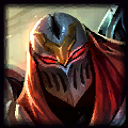
Team Synergy
Zed wants teammates who make the first few seconds of a fight clean. He can create threat on his own, but he gets much more value when someone else forces defensive cooldowns, pins targets near his shadows, or covers the moment after he commits. The best teams give him three things: reliable engage or crowd control, vision and poke pressure that softens carries before he marks them, and a second damage source so the enemy cannot spend every shield, exhaust, and peel tool only on Zed.
1. Hard engage tanks: Malphite, Amumu, Leona, Nautilus
- Synergy mechanism: These champions start fights in a way Zed loves: the enemy backline has to react before Zed shows his full hand. When a tank locks down multiple targets or forces a carry to stand still, Zed gets a safer window to place shadows, land his burst, and choose whether to finish or snap back.
- Combo: Let the tank walk up first and threaten the engage. Once the enemy carry uses movement, cleanse-style tools, or a major peel spell, Zed follows with his mark and shadow damage. If the tank hits more than one target, Zed should usually pick the squishiest target that cannot be protected immediately, not the closest target.
- Best scenario: This is strongest when your team can fight front-to-back for a few seconds before Zed commits. The tank absorbs the first wave of spells, the enemy support panics, and Zed enters after the key answer is already spent. In narrow ARAM fights, one good engage can also trap the enemy team near Zed’s shadow angles.
- Enemy answer: The enemy will try to hold peel for Zed instead of using it on the tank. Good supports will wait for his re-entry, shield the marked target, or turn on Zed when he appears.
- Failure risk and recovery: If Zed dives at the same time as a missed engage, he becomes the only real target and dies before his damage matters. Recover by playing one fight slower: throw safe poke, let the tank bait cooldowns again, and only commit when the enemy backline has already moved or split.
2. Reset and cleanup divers: Pyke, Viego, Kha'Zix, Katarina
- Synergy mechanism: Zed is excellent at putting one enemy into lethal range. Reset champions turn that single pick into a full fight win. They also punish enemies who clump to protect the marked target, because the first death creates chaos and opens the next one.
- Combo: Zed should usually mark the priority carry or the lowest-mobility damage dealer. The reset teammate hovers just outside the first burst window, then enters when the target is forced low or when the support uses their save. If the target survives with a defensive tool, the reset champion can swap to the exposed support or secondary carry while Zed exits.
- Best scenario: This pairing shines when the enemy has one clear carry and several fragile champions around them. Zed forces that carry to retreat, Pyke or Viego threatens the execute or possession angle, and the enemy team loses formation. Even if Zed does not get the kill, the reset champion often gets the first body.
- Enemy answer: The enemy should group tightly behind peel, deny low-health chase angles, and avoid giving staggered deaths. They can also bait Zed’s mark on a target with stasis, shield stacking, or heavy damage reduction, then punish both divers for overcommitting.
- Failure risk and recovery: Double assassin teams can run out of damage if the first target lives. If that happens, stop diving the protected carry every fight. Use Zed’s poke and shadows to chunk side targets, then let the reset champion start on whoever is actually killable.
3. Long-range poke and siege: Jayce, Varus, Xerath, Lux, Ziggs
- Synergy mechanism: Poke champions lower the health bar before Zed has to risk his body. That changes his job from “one-shot through every defensive layer” to “finish the target after they have already been softened.” They also force enemies to dodge in predictable lines, which gives Zed better shadow angles.
- Combo: Hold Zed’s full commit until a poke spell lands or forces a defensive response. If Varus or Lux roots a target, Zed can immediately layer burst before the enemy support has clean spacing. If Jayce, Xerath, or Ziggs chunks a carry, Zed should threaten from the side so the target cannot simply walk backward in a straight line.
- Best scenario: This is best when your team controls the middle of the lane and the enemy has to walk through skillshots to reach you. Zed can sit just outside hard engage range, throw shadow poke, and punish anyone who steps forward while low. The poke team also helps him avoid bad all-ins into full-health bruisers.
- Enemy answer: The enemy will look for one decisive engage before poke stacks up. They may also hide behind minions, use sustain, or send a tank forward to eat skillshots while saving crowd control for Zed.
- Failure risk and recovery: If the poke misses, Zed may feel forced to create the fight alone. That is usually a trap. Reset the wave, keep shadow poke short, and wait for the next landed spell. Zed is much better as the second hit after poke than as the only engage tool on a pure siege team.
4. Protective enchanters and anti-dive supports: Lulu, Karma, Janna, Milio
- Synergy mechanism: Zed does not need a babysitter to start damage, but he benefits a lot from protection after the commit. Shields, speed, disengage, and anti-burst tools let him survive the punish window when he appears near his target or returns to a shadow with enemies waiting.
- Combo: The support should not spend every shield before Zed enters. Save one key defensive spell for the moment he takes return damage or gets tagged by crowd control. Zed can then mark, burst, and either continue if the target is isolated or snap back while the support blocks the counter-engage.
- Best scenario: This is strongest against enemy teams with assassins, bruisers, or instant retaliation. Zed can play aggressively into the backline knowing his own backline will not collapse the moment he leaves. Enchanter speed also helps him reposition for shadow poke before the main fight starts.
- Enemy answer: Smart enemies will ignore the shielded Zed and hit the enchanter, or they will wait until the support spell is used on someone else before forcing the fight. They can also chain crowd control so Zed cannot use his exit cleanly.
- Failure risk and recovery: If the support follows Zed too far forward, both can die together. The recovery is simple: Zed dives alone, the enchanter stays with the carries, and protection is used only when Zed returns into friendly space or when the enemy counter-dives.
5. Zone control mages: Orianna, Viktor, Anivia, Azir, Veigar
- Synergy mechanism: Zone mages make the enemy choose between bad positions. If they spread out, Zed finds an isolated carry. If they clump, the mage controls the choke and punishes the group. This gives Zed cleaner target selection and reduces the chance that five players instantly collapse on him.
- Combo: Let the mage place their zone first around the wave, turret area, or choke. Zed then shadows from an angle that cuts off the carry’s escape route rather than diving straight through the front line. If the enemy steps around the zone, Zed punishes the side path. If they stand inside it, the mage deals the heavy area damage while Zed finishes the priority target.
- Best scenario: This setup is excellent when the enemy has immobile carries who need teammates nearby to feel safe. Veigar-style cages, Anivia walls, Viktor zones, Azir soldiers, or Orianna ball pressure can split the fight long enough for Zed to isolate one target.
- Enemy answer: The enemy should force before the zone is established or wait until Zed’s shadow threat is down. Mobile champions can also dodge the mage zone and bait Zed into chasing too deep.
- Failure risk and recovery: If Zed dives before the zone lands, he removes the whole point of the pairing. Recover by playing around space instead of kills: threaten flank angles, let the mage control the lane, and only commit when the enemy carry has already been pushed away from their peel.
What Zed needs most from a team: one reliable way to start or stop a fight, enough ranged damage to make enemies enter fights below full health, and at least one ally who can punish the enemy for overcommitting onto him. He struggles most when every teammate is also waiting for someone else to go first, or when the team has no sustained damage after his first burst. Give him setup, give him a second threat, and he becomes much harder to peel cleanly.