Team Synergy
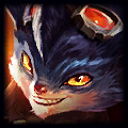
Rumble wants teammates who make enemies stand still, walk through choke points, or panic into bad paths. His best fights happen when someone else starts the mess and he drops The Equalizer across the retreat line, not when he is forced to be the only engage. He also values reliable peel, because once he commits forward with Flamespitter and heat pressure, he needs a few seconds where the enemy cannot simply burst him or kite straight back.
The team functions Rumble needs most are hard crowd control, front-to-back spacing, wave control, and follow-up damage that punishes enemies trapped on his ultimate. He does not need another champion who only pokes from maximum range and refuses to fight. He needs someone who can say, “they are stuck here now,” so Rumble can turn a narrow bridge into a burning hallway.
1. Amumu
- Synergy mechanism: Amumu gives Rumble the thing he wants most: a clean, reliable clump. When Amumu locks multiple targets in place, Rumble can place The Equalizer through their bodies and toward their escape path instead of guessing where they will run.
- Combo: Let Amumu start with Snowball or Flash-style engage, then Rumble immediately lays The Equalizer diagonally behind the trapped enemies. Walk up with Flamespitter only after the crowd control lands, not before. If Rumble enters first, the enemy can spread and save mobility for the real engage.
- Best scenario: This pairing is brutal when the enemy team has short-range carries, melee bruisers, or supports who must group to protect one target. Amumu holds them in one zone, and Rumble turns that zone into a damage check they usually do not want to take.
- Enemy answer: Good opponents will fan out before Amumu reaches them, hold disengage for his entry, or bait Rumble into ulting only the frontline. Some teams will also wait for Rumble to overstep after the engage and then collapse when his heat window is awkward.
- Failure risk and recovery: If Amumu misses or only catches a tank, do not throw The Equalizer just to “help.” Save it for the counter-engage or place it defensively across the enemy chase line. Rumble recovers well by clearing the wave and resetting the fight around the next choke.
2. Jarvan IV
- Synergy mechanism: Jarvan creates walls, forced movement, and panic flashes. Rumble loves that because his ultimate is not just damage; it is a zoning tool. When Jarvan traps someone, Rumble can cover the inside of the zone or cut off the only exit.
- Combo: Jarvan engages first and commits his terrain onto carries or clustered backliners. Rumble then drops The Equalizer either across the trapped area or just behind it if the enemy still has a way out. The key is not stacking everything on the first champion Jarvan touches if the real damage dealers are one step behind.
- Best scenario: This is strongest against teams that rely on one immobile marksman or mage to carry fights. Jarvan forces that champion to choose between staying in Rumble’s burn zone, using mobility defensively, or walking into Rumble’s frontline damage.
- Enemy answer: The enemy can counter by saving displacement, knockbacks, or invulnerability-style tools for Jarvan’s dive. They can also punish if Jarvan traps Rumble’s own team out of follow-up range. Bad terrain placement turns a winning combo into a split fight.
- Failure risk and recovery: If Jarvan dives too deep and Rumble cannot follow, use The Equalizer as a rescue line between Jarvan and the enemy backline rather than as a greed damage cast. If the fight is already lost, Rumble should shield back, slow with Harpoon, and protect the wave so the team does not lose the next fight before respawns stabilize.
3. Seraphine
- Synergy mechanism: Seraphine gives Rumble layered crowd control, shields, and fight extension. Rumble’s damage is strongest when enemies are held in a lane and forced to take repeated ticks while deciding whether to retreat or re-engage. Seraphine makes that decision slow and painful.
- Combo: Seraphine can start with a long-range charm or follow an ally’s engage, then Rumble places The Equalizer across the charmed path. If Seraphine is saving her big control, Rumble can also ult first to force the enemy to run in a predictable direction, giving her an easier line.
- Best scenario: This pairing shines in slower ARAM: Mayhem fights where both teams posture around minion waves and health bars. Seraphine keeps Rumble healthy enough to threaten forward, while Rumble gives her team the damage zone needed to stop enemies from simply walking through her poke.
- Enemy answer: Hard dive is the main answer. If assassins or bruisers ignore the burn zone and jump straight onto Seraphine, Rumble has to peel instead of chasing. Enemies can also spread wide so her control does not chain through the whole team.
- Failure risk and recovery: The danger is over-layering. If Seraphine and Rumble both spend their best tools on a low-value target, the enemy can wait it out and engage after. Recover by playing the next wave slowly: Seraphine clears and shields, Rumble holds Harpoon and ultimate threat for the next forced choke instead of fishing alone.
4. Ornn
- Synergy mechanism: Ornn supplies the durable front line and repeatable knock-up threat Rumble often lacks. Rumble does not want to be the only champion standing between his carries and the enemy engage. Ornn absorbs that first hit, then Rumble punishes the enemy for clumping around him.
- Combo: Ornn walks up to contest space and threatens a knock-up or long engage. When the enemy steps around him or commits into him, Rumble lays The Equalizer behind the enemy frontline and through the backline approach. This makes their engage messy: they either keep fighting in the burn path or split away from their tanks.
- Best scenario: This is excellent into dive-heavy teams that need to pass through one narrow point. Ornn buys time, Rumble covers the path, and the rest of the team can hit safely while enemies are slowed, displaced, or forced to retreat through damage.
- Enemy answer: Poke and disengage can make this duo feel slow. If the enemy never commits and only chips Ornn down, Rumble may be tempted to ult from too far away. That usually gives the enemy a free reset if the line does not cut off movement.
- Failure risk and recovery: If Ornn engages without follow-up range, Rumble should not sprint into five people just to match him. Drop a defensive Equalizer across the counter-chase, use shield to reposition, and let Ornn retreat through the zone. The recovery plan is to force the next fight after Ornn’s health is stable and the wave is not under your turret.
5. Ashe
- Synergy mechanism: Ashe gives Rumble constant slows, vision pressure, and a straightforward pick tool. Rumble’s ultimate becomes much easier to place when the enemy is already slowed or when Ashe forces a dodge pattern with her arrow.
- Combo: Ashe looks for a catch on a carry or an overextended frontliner. Rumble should not always ult directly on the stunned target; often the better cast is behind them, cutting off the teammates who want to save them. If the target is isolated, then Rumble can walk in with Flamespitter and finish while Ashe keeps them from escaping.
- Best scenario: This works best against teams with limited hard engage and predictable walking patterns. Ashe keeps them slowed in the lane, Rumble threatens the punish zone, and every missed sidestep can become a full fight.
- Enemy answer: Strong engage teams can punish Ashe before Rumble gets a clean angle. If the enemy saves a tank body to block arrows or uses fast flank pressure, Rumble may be forced to peel instead of following picks.
- Failure risk and recovery: The risk is playing too far back and turning Rumble into a weak poke champion. If Ashe misses the pick, Rumble should hold ground near the wave, tag divers with Harpoon, and wait for the next slow chain. If the enemy dives Ashe, The Equalizer across her escape path can be better than a damage ult on their backline.
Rumble’s best teammates do not just add damage; they shape the fight. If the team can lock enemies in a lane, deny clean disengage, and protect Rumble during his forward burn window, he becomes a fight-warping AP threat. If the team has no engage, no peel, and no way to hold enemies inside his ultimate, he has to play more patiently: clear waves, punish oversteps, and save The Equalizer for guaranteed terrain control instead of low-odds highlight casts.